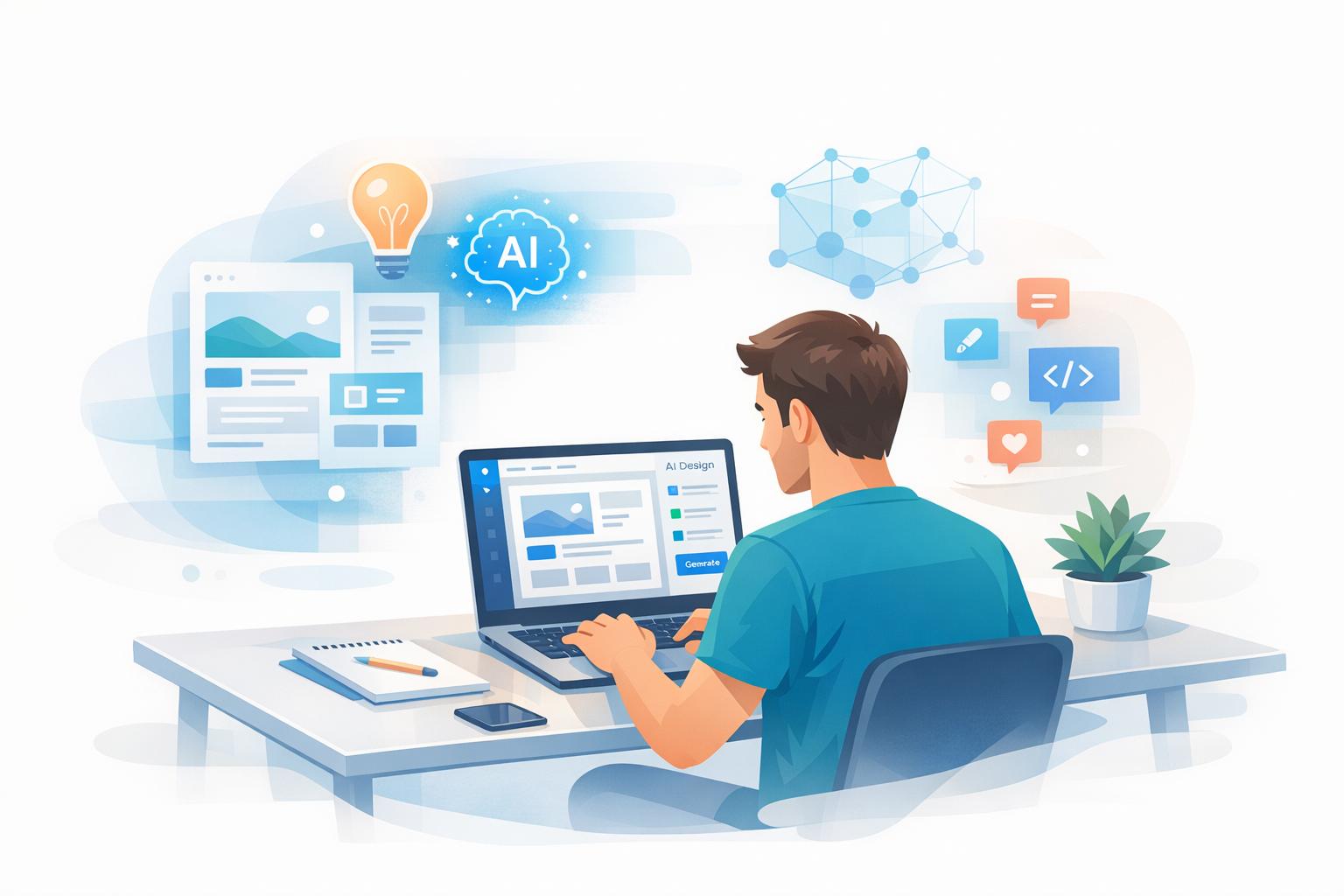
How Web Designers Should Adapt in the Age of AI
The rapid advancement of artificial intelligence (AI) is transforming virtually every industry, and web design is no exception. What was once a highly specialized skillset is now being democratized by tools and platforms that allow anyone, regardless of technical expertise, to create functional and visually appealing websites. But where does this leave professional web designers? Are we moving toward a future where human creativity and expertise are overshadowed by AI? Or is there a way for designers to thrive in this changing landscape?
This article explores the challenges and opportunities for web designers in the age of AI, drawing insights from a discussion between two experts deeply embedded in the field. Their conversation delves into how AI is reshaping the web design industry, the future of work, and the steps designers can take to stay relevant. Let’s break it down.
The AI Disruption: A New Era for Web Designers
Web design, once the domain of coders and creatives, has already seen significant shifts with platforms like Webflow, Wix, and Squarespace, which lower the barrier to entry. These tools have made it easier for non-technical individuals to create websites. Now, AI is taking things a step further. Advanced AI systems can design, code, and even optimize websites faster and with fewer errors than human designers.
One speaker emphasized, "Most of my skills have now gotten to a point with AI where AI can do it as good or better than me, which is insane to think about." This highlights a growing concern: as AI tools become increasingly powerful, what happens to human expertise?
Despite these challenges, the speakers remain hopeful. The rise of AI doesn’t necessarily mean the end of web design as a profession. Instead, it’s likely to redefine the role of web designers. Creativity, personal preferences, and unique perspectives will still play a significant part. As one participant put it, "If websites mean a lot to me and I like building good websites... I’m gonna build a better website than you are with the same AI."
The takeaway? The tools may evolve, but the pursuit of quality and passion-driven work will set skilled designers apart.
sbb-itb-32f6eb2
Redefining Roles: From Technical Skills to Creative Expertise
One of the most fascinating shifts brought about by AI is the reduced importance of traditional technical skills. While coding and manual design were once essential, AI tools are increasingly shouldering these tasks. This means that future designers may focus less on mastering the technicalities of HTML or CSS and more on higher-level skills like strategy, creativity, and user experience (UX).
The speakers discussed a hopeful future where "we do what we want to do, what we’re passionate about." In this future, designers might specialize based on their interests - some focusing on websites, others on apps, while AI handles the repetitive or technical work. This specialization would elevate the profession, allowing designers to focus on innovation and quality instead of spending hours on mundane tasks.
Still, the conversation acknowledged potential downsides. The democratization of tools might saturate the market with low-quality work, making it harder for outstanding designs to stand out. However, in a world where the barrier to entry is low, the differentiating factor will always be the quality of the final product. Passionate and skilled designers who embrace AI as a tool rather than a competitor will have the upper hand.
Emerging Opportunities in AI and Cybersecurity
The discussion also ventured into adjacent fields like AI security and cybersecurity, highlighting them as burgeoning areas of interest. One expert noted that "the industry that would be most interesting for the future is AI security," citing examples of how advanced AI tools are already being misused for cyberattacks. As AI becomes more prevalent in web development, protecting digital assets from malicious use of the same tools will become increasingly critical.
For web designers, this means new opportunities to integrate security-first thinking into their work. Whether it’s designing for secure user experiences or collaborating with cybersecurity specialists, understanding the vulnerabilities AI introduces can be a valuable skillset.
Practical Tips for Navigating the AI Landscape
So, what can web designers do to stay relevant in this AI-driven world? Here are some actionable strategies:
1. Embrace AI Tools
Rather than fearing AI, learn to use it effectively. Many tools can speed up your workflow, automate repetitive tasks, and help you focus on creative problem-solving. For example, one participant shared how they built a Chrome extension to automate tedious tasks like converting transcripts into blog posts. This saved time and allowed them to focus on higher-value work.
2. Focus on Creative Quality
AI can replicate technical skills, but creativity and innovation remain uniquely human. Hone your ability to create compelling designs that resonate with users emotionally. As the speakers pointed out, passion will always shine through, even when using the same AI tools as your competitors.
3. Specialize to Stand Out
With AI lowering the barrier to entry, clients will increasingly value specialists who deliver outstanding results in specific niches. Whether it’s e-commerce, SaaS platforms, or personal branding sites, finding your niche can help you differentiate yourself.
4. Stay Curious and Adaptable
In such a fast-changing environment, staying up-to-date is critical. The speakers emphasized the importance of learning alongside your audience and experimenting with tools in real time. This approach not only makes content creation more relatable but also keeps you ahead of the curve.
The Human Element in Web Design
Despite all the technological advancements, the speakers underscored that the human element will remain central to web design. One participant recounted how they showed someone ChatGPT for the first time and witnessed their amazement. This highlights a critical point: not everyone understands the capabilities of these tools yet, and there’s still immense value in human guidance and education.
Moreover, the best AI solutions often arise from personal need. As one speaker noted, "Whatever you do, there’s something where you’re like, ‘I need something to do this.’ Okay, build it. Build it. If you use it constantly and you like it, maybe other people will too." This mindset - of solving real problems for yourself and others - will remain a cornerstone of innovation in web design.
Key Takeaways
- AI is reshaping web design by automating technical tasks and lowering the barrier to entry.
- Human creativity remains vital in delivering high-quality, passion-driven designs that stand out.
- Specialization is key: Focus on areas you’re passionate about to differentiate yourself.
- Learn to leverage AI tools to save time and enhance your workflow.
- Cybersecurity and AI security present exciting opportunities for those interested in protecting digital assets.
- Stay curious and adaptable, learning alongside your audience and embracing new tools as they emerge.
- Solve real problems for yourself and others - the best innovations often come from addressing personal needs.
Conclusion
The age of AI is undeniably exciting, but it also raises complex questions about the future of work and creativity. For web designers, it’s both a challenge and an opportunity. While AI tools may replace some traditional skills, they also empower designers to focus on what truly matters: creating meaningful, high-quality work. By embracing these tools, staying adaptable, and continually honing their creativity, web designers can not only survive but thrive in this new landscape.
As one speaker put it, "The future is going to look so different... but I’m hopeful that it’s going to transition into something where we can all work on stuff that we want to work on." The key is to adapt, innovate, and never stop learning. After all, the best designs are yet to come.
Source: "The New Role of Web Designers in the Age of AI" - Memberstack Team, YouTube, Dec 15, 2025 - https://www.youtube.com/watch?v=vXpEz2H0jH8