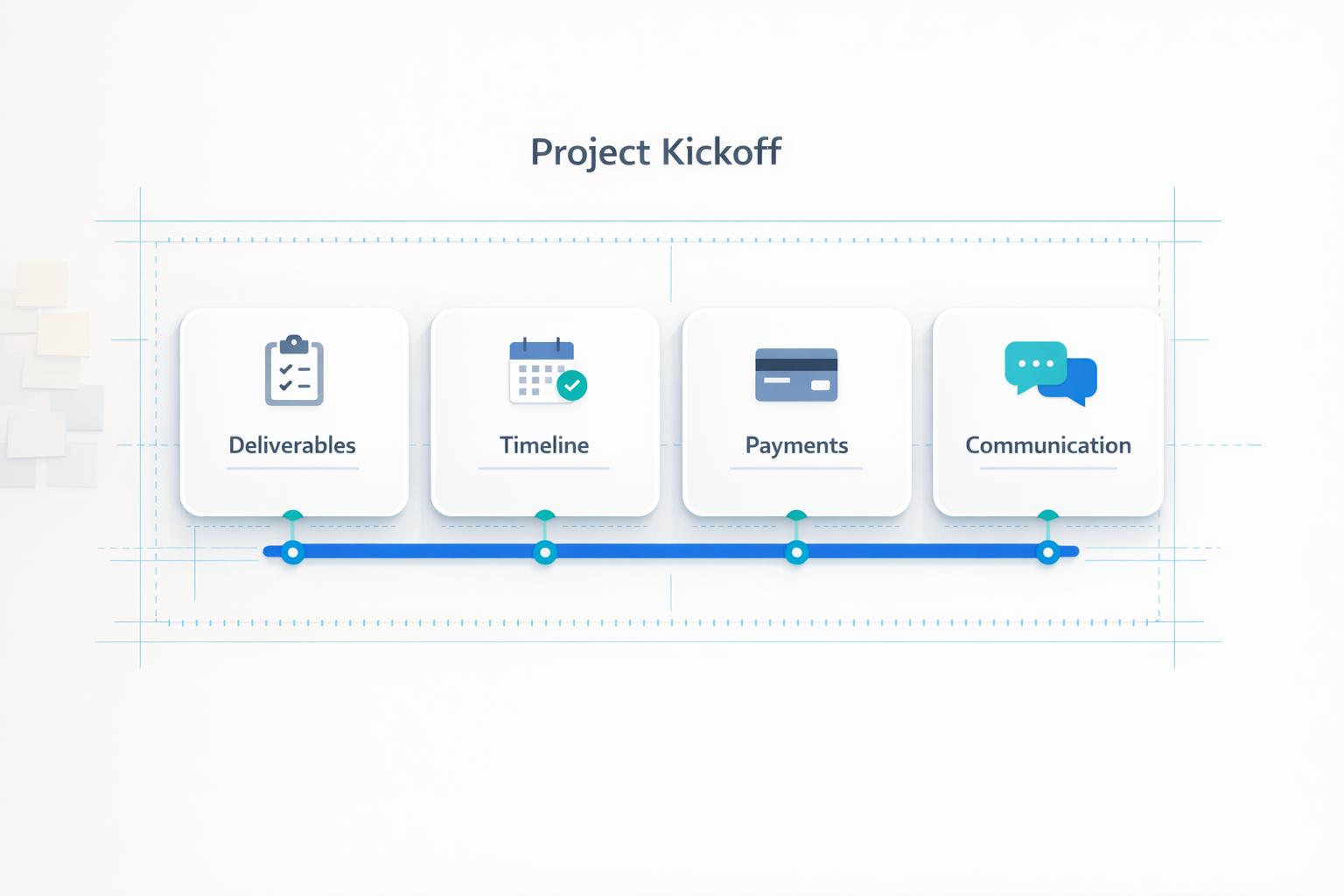
Setting Client Expectations Early
Want smoother projects and happy clients? Start with clear expectations. The first 90 days with a client can make or break your relationship. Misaligned assumptions lead to chaos - missed deadlines, endless revisions, and unpaid invoices. The solution? Lay everything out upfront.
Here’s how to avoid confusion and set the stage for success:
- Kickoff Document: Define deliverables, timelines, and payment terms in writing.
- Scope Clarity: Specify what’s included, file formats, and revision limits.
- Timelines: Break projects into phases with clear milestones and buffer time.
- Payment Terms: Require upfront deposits and enforce late payment policies.
- Communication Protocols: Use tools like email for updates, Slack for quick chats, and video calls for complex discussions.
- Feedback Simplification: Tools like Boast make it easy for clients to provide precise input without hassle.
Set client expectations so your projects run smoothly
sbb-itb-32f6eb2
Create a Project Kickoff Document
A kickoff document lays out the essentials: deliverables, deadlines, and payment terms. It’s a key tool for avoiding misunderstandings, missed deadlines, and payment disputes. This document is the foundation for aligning expectations and ensuring a smooth project journey.
Think of it as setting the ground rules for the entire client relationship. It answers common questions upfront and puts everything in writing before any issues arise. This can help you sidestep those frustrating "I thought you were handling X" conversations that can derail a project and erode trust.
Define Scope and Deliverables
Be crystal clear about what you will - and won’t - deliver. Vague terms like "logo design" or "website copy" leave too much room for misinterpretation. Instead, break things down into specifics: for example, three logo color options, a 1,200-word homepage, or five 150-word product descriptions.
Also, specify file formats (e.g., Adobe InDesign, Microsoft Word) to prevent hiccups later. Don’t forget to outline your revision policy. State the number of revision rounds included in your fee, and make it clear that any additional revisions will come at an extra cost.
"Anything outside the agreed scope will be quoted separately." - Upsourced Accounting
Set Timelines and Milestones
Divide the project into phases and assign dates to each stage. For instance: complete research by May 15, deliver the first draft by June 1, receive feedback by June 8, and finalize everything by June 22. These milestones give clients a clear view of the project’s progress and help manage expectations.
It’s smart to build in a bit of buffer time. If a task usually takes three weeks, quote four. This extra time cushions against unexpected delays, like technical glitches or extended feedback loops, and allows you to finish ahead of schedule when things go smoothly. Highlight the critical path - the sequence of tasks that directly impacts the final deadline - so everyone knows which dates are non-negotiable.
Include Payment Terms and Approval Processes
Clarity is key when it comes to payment. Outline invoice dates, payment due dates, and the consequences of late payments. For project-based work, always require a meaningful upfront payment before starting.
Be firm about late payments. If an invoice isn’t paid on time, work stops. As one expert puts it:
"If payment isn't received on time, work pauses. Period. That's not being difficult - that's being smart. The deliverable is your only leverage." - Upsourced Accounting
For ongoing retainer arrangements, consider adding a Cost of Living Adjustment (COLA) clause. This ensures your fees increase by 3–5% annually, eliminating the need for awkward renegotiations every year.
With deliverables, timelines, and payment terms locked in, you’ll be ready to establish clear communication protocols for the project.
Establish Communication Protocols
Once you've nailed down deliverables and timelines, the next step is setting up communication protocols. This ensures everyone stays on the same page and avoids unnecessary delays or confusion. The first 90 days are crucial - they set the stage for how the rest of the project will unfold. Will it be smooth collaboration or constant firefighting? That depends on how you communicate.
Define Preferred Communication Channels
Start by identifying the best channels for different types of communication. For instance:
- Email: Ideal for formal updates, billing, and documentation. It creates a searchable, permanent record of discussions and agreements.
- Messaging apps (like Slack): Perfect for quick questions and day-to-day coordination. These tools reduce inbox clutter and speed up response times.
- Video calls: Best for kickoff meetings, discussing complex goals, or when building trust is essential.
Consolidate communication on one platform whenever possible to avoid scattered messages. As Eizel Nepomuceno from FreeUp explains, "Choosing the right communication channels - whether email, Slack, or video calls - ensures information flows efficiently".
It’s also important to establish response time expectations. If clients expect round-the-clock availability, gently set boundaries by reinforcing your working hours and offering scheduled check-ins instead.
Once the channels are defined, regular check-ins are the next step to maintaining momentum.
Schedule Regular Check-ins
Consistent updates keep everyone aligned and engaged. Whether you choose weekly or monthly check-ins, structure them around these three points:
- What’s been accomplished
- What’s coming next
- What’s needed from the client
During your kickoff call, agree on success metrics for the first 90 days. Tools like Asana or ClickUp can help visualize progress through features like Kanban boards, making updates more tangible and easy to follow. You could also create a simple "How We Work" one-pager - something like a branded PDF or Notion page that outlines your process, communication preferences, and feedback guidelines. Having this in place from day one sets clear expectations and minimizes misunderstandings.
Regular updates also create a natural rhythm for collecting feedback.
Simplify Feedback Collection
Streamlining how you gather feedback can make a huge difference in keeping the project on track. Instead of wading through vague email comments like "make the logo bigger", use tools that allow clients to leave direct, contextual feedback on specific elements.
For example, Boast (https://boastimage.com) lets clients click a link to provide comments directly - no need for accounts, logins, or extra training. Meanwhile, your team benefits from features like version tracking, task management, and Kanban boards.
The result? Faster revisions, clearer input, and fewer back-and-forth emails. As Upsourced Accounting puts it, "Before you start handing over polished deliverables, your communication is your deliverable". Simplifying feedback collection is a critical part of ensuring smooth communication.
Set Realistic Goals and Milestones Together
Collaborating on goal setting is key. When clients are part of the process, they’re more invested, and vague ideas can be transformed into clear, measurable objectives.
Use SMART Criteria for Goal Setting
SMART goals - Specific, Measurable, Achievable, Relevant, and Time-bound - help eliminate ambiguity. For instance, instead of saying, "redesign the website", you could frame it as: "Deliver a 5-page responsive website with a contact form, blog section, and product gallery by June 15, 2026."
A helpful starting point? Ask your client this: "In 90 days, what would make you give us a 10/10 score?"
This question pushes clients to articulate what success looks like for them. It could mean launching a product on time, reaching a specific conversion rate, or speeding up internal processes. By understanding their priorities, you can focus on what matters most.
It’s also crucial to outline what’s not included in the project. For example, if a client later requests an e-commerce feature, clarify that it’s outside the current scope and provide a separate estimate if needed.
Once goals are established, make sure they’re documented to avoid confusion later.
Document Agreements in Writing
After finalizing goals and timelines, put everything in writing. Verbal agreements can easily lead to misinterpretations. As Deian Isac, Head of Agency Success at Wayfront, puts it:
"Verbally communicating doesn't have the same effect as written communication. When you agree to conditions or terms, having everything in writing with precise wording ensures there's no misunderstanding."
Create a straightforward project scope document that lays out deliverables, what’s excluded, revision limits, and key dates. After each meeting, immediately follow up with a summary email that highlights key agreements. To keep things running smoothly, include a short document outlining the process, communication protocols, and feedback expectations.
Manage Scope Changes and Boundaries
Once you've set clear deliverables and communication norms, the next step is to stay on top of scope changes to keep your project on track.
Even with a solid plan, unexpected requests for extra work can pop up. That's why it's important to define a process early on to handle these requests without throwing off your timeline or budget.
Define a Change Management Process
During the kickoff call - where you discuss scope, timelines, and feedback - lay out a clear "rules of engagement" framework. This should specify exactly what’s included in the scope and what’s not. When a client requests something outside the original agreement, try the "Yes, and..." approach to acknowledge their idea while addressing its implications:
"This is a great idea and definitely something we can help with. Since it's outside the current scope, I'll get you a quick estimate for what that would cost and how it fits into the timeline."
- Upsourced Accounting
If a client pushes for out-of-scope changes, refer back to your established revision policy. For example, if your agreement includes two rounds of revisions, remind them of this before offering additional options:
"We've already completed the two included revision rounds. Happy to continue iterating - let me know if you'd like to proceed hourly or via a fixed add-on."
- Upsourced Accounting
It’s also wise to build in some buffer time for minor tweaks or unforeseen delays. This flexibility can save you from scrambling later.
To minimize scope creep altogether, make regular scope reviews a standard part of your process.
Schedule Regular Scope Reviews
Weekly check-ins are a great way to catch scope creep before it spirals out of control. Use these meetings to review completed tasks and preview what’s coming next. This keeps the client informed and ensures everyone stays aligned. Setting milestone approvals - like sign-offs for scripts, rough drafts, or design mockups - can help you address potential issues early, avoiding major rework later on.
The first 90 days of any project are especially important for establishing boundaries. If you don’t enforce them early, the relationship can quickly become bogged down by inefficiencies and misaligned expectations.
Use Boast for Client Feedback and Alignment
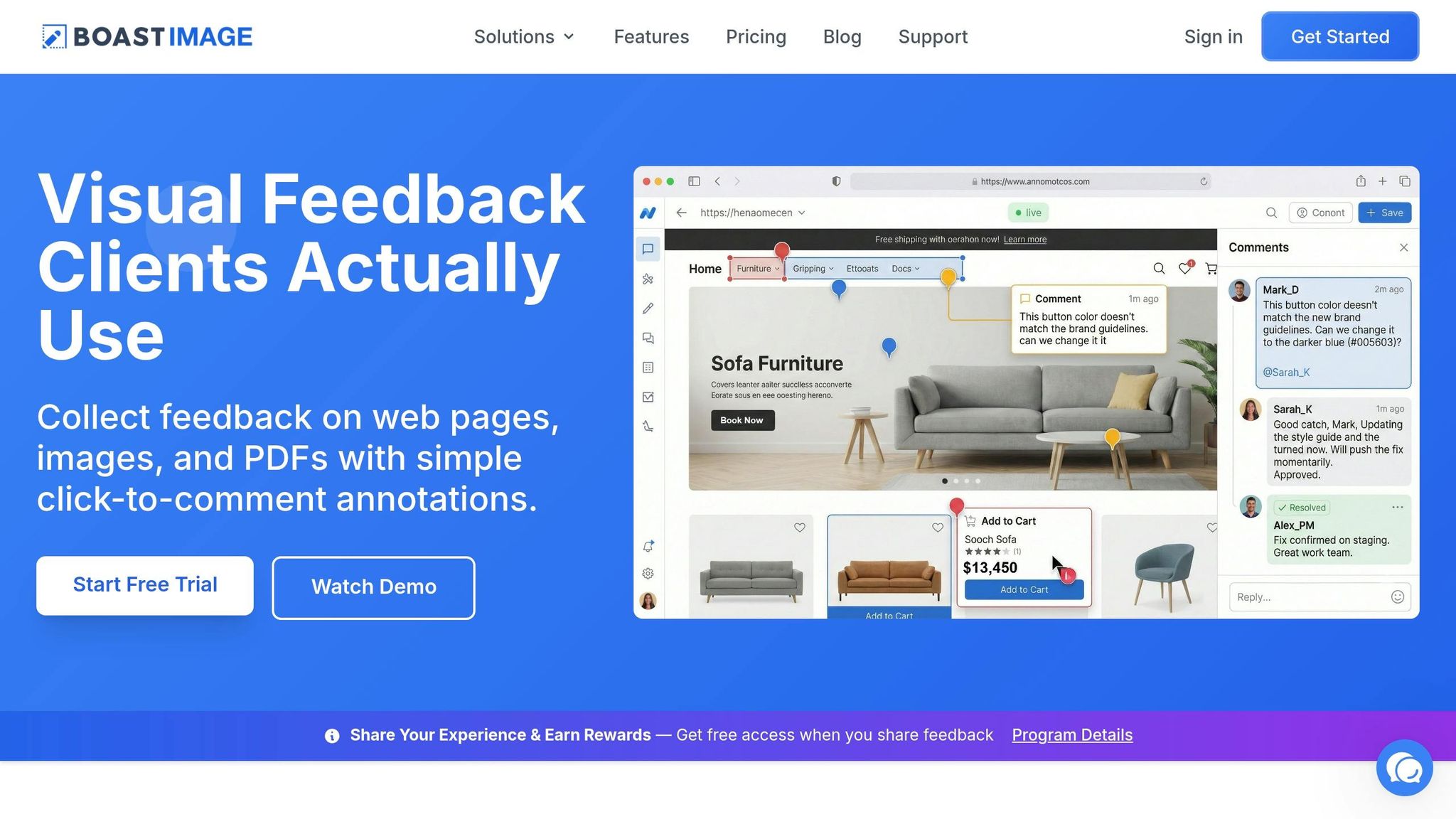
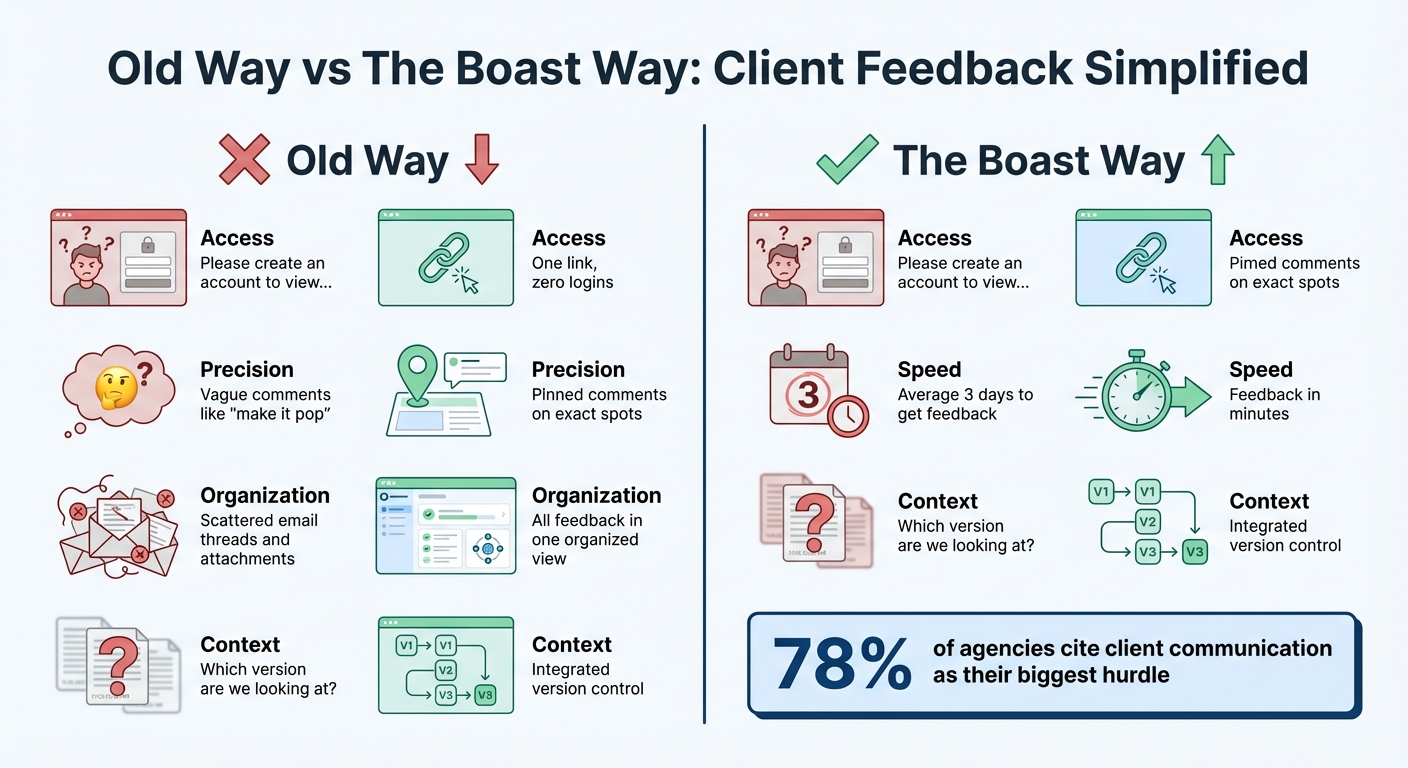
Client Feedback Management: Traditional Methods vs Boast Platform Comparison
Clear communication is key, but even with solid protocols in place, managing client feedback can still feel like herding cats. In fact, 78% of agencies cite client communication as their biggest hurdle. The problem isn’t that clients don’t want to provide feedback - it’s that traditional tools make it harder than it needs to be. Simplifying this process not only reinforces expectations set early on but also ensures smoother project alignment.
That’s where Boast steps in, bridging the gap between your team’s needs and what clients can easily handle.
Simplify Client Feedback with Login-Free Access
One of the biggest stumbling blocks in feedback workflows is getting clients to actually engage with the system. If they have to create an account, manage passwords, or watch a tutorial just to leave comments, you’re likely to lose a good chunk of reviewers before they even begin.
Boast changes the game. With Boast, clients simply click a link to view your deliverable - whether it’s a web page, PDF, or image - and can leave comments directly on specific areas. Sasha Shevelev, Co-founder of Webcoda, explains the impact:
"Before Boast, clients would try to send screenshots with scribbles we couldn't decipher or dozens of emails with issues we were often unable to recreate".
Additionally, Boast automatically captures technical metadata, cutting down on back-and-forth questions. By sending out one link to everyone, you consolidate all "Round 1" feedback in a single, organized space, eliminating the chaos of conflicting or sequential requests.
| Feature | Old Way | The Boast Way |
|---|---|---|
| Access | "Please create an account to view..." | One link, zero logins |
| Precision | Vague comments like "make it pop" | Pinned comments on exact spots |
| Organization | Scattered email threads and attachments | All feedback in one organized view |
| Speed | Average 3 days to get feedback | Feedback in minutes |
| Context | "Which version are we looking at?" | Integrated version control |
Clients get a seamless, frustration-free way to provide feedback, while your team gains clarity and control.
Manage Internal Processes with Team Features
Boast doesn’t just make life easier for clients - it also streamlines your internal workflows. Feedback is automatically turned into actionable tasks, which can be managed on a Kanban board. Version control allows you to upload updated iterations to the same link, letting clients compare changes to their previous comments without digging through email chains.
This clear division of responsibilities ensures everyone stays on the same page: clients can focus on providing input effortlessly, while your team handles the organization and execution of that feedback.
Conclusion
Laying out client expectations from the start is key to building a strong, lasting partnership. The first 90 days of working together are crucial - they set the tone for either smooth teamwork or potential challenges down the road. Tools like a kickoff document, clear communication guidelines, and a "10-out-of-10" framework help turn abstract goals into measurable, actionable results.
Clear communication and transparency can shift the dynamic from a simple transaction to true collaboration. By establishing a solid framework early on, you can streamline updates and centralize feedback. This means using tools for proactive updates, visual progress tracking, and organizing feedback into a single, manageable space - rather than juggling scattered emails and messages.
Having these expectations in place also makes real-time collaboration more effective. For example, Boast's login-free feedback system simplifies the process, speeding up approvals and keeping projects moving forward without unnecessary delays.
FAQs
What should a kickoff document include?
A kickoff document serves as the foundation for any project, laying out clear goals, scope, timelines, and communication plans. Think of it as the roadmap that ensures everyone involved is on the same page from day one.
Here’s what it should cover:
- Objectives: Define the purpose and what the project aims to achieve.
- Deliverables: Clearly outline the expected outputs or results.
- Milestones: Highlight key stages or deadlines to track progress.
- Roles and Responsibilities: Specify who’s doing what to avoid confusion.
- Feedback Processes: Explain how feedback will be collected and implemented.
- Update Schedule: Detail how and when updates will be shared to keep everyone informed.
By organizing these elements into a structured document, you set the stage for smooth collaboration and aligned expectations right from the start.
How do I prevent scope creep without upsetting clients?
The key to avoiding scope creep while keeping clients happy is setting clear expectations from the very beginning. Start by defining the scope, deliverables, timelines, and communication methods in writing. Then, make sure the client fully agrees to these terms before moving forward.
Once the project is underway, regular communication is critical. Keep the client updated on progress, and if any changes to the scope come up, address them head-on. Discuss these adjustments openly and provide a separate quote for any additional work. This approach ensures transparency while maintaining a positive and professional relationship with your client.
What’s the fastest way to get clear client feedback?
The quickest path to getting clear client feedback is to establish expectations right from the start. Lay out the goals, scope, timelines, and communication methods upfront to prevent confusion later on. Including visual references can help make input clearer, while a structured feedback process keeps everything on track. Sending an initial email to set expectations ensures everyone is aligned, cutting down on unclear or delayed responses.