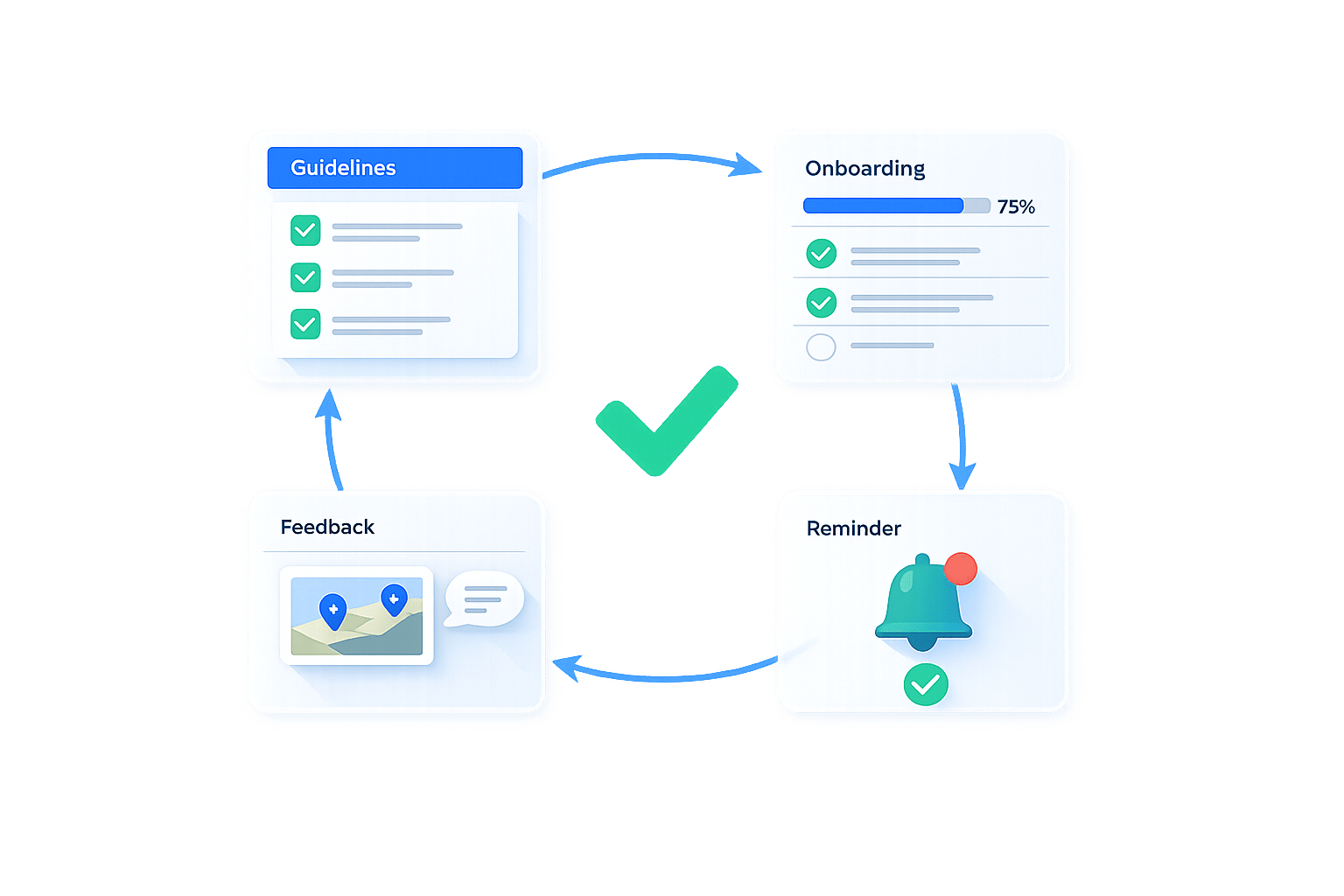
How To Get Clients To Follow Guidelines
Getting clients to follow project guidelines is about clarity, consistency, and making the process simple for everyone involved. Clear communication rules not only save time and money but also build trust - something 98% of agencies and clients agree is key to a successful relationship. Here’s how you can make it work:
- Write clear, simple instructions: Avoid jargon and provide specific examples like annotated screenshots or DO/DON’T lists.
- Set expectations early: Use onboarding to explain communication channels, timelines, and feedback processes.
- Use tools that don’t require logins: Simplify collaboration with platforms like Boast, which let clients provide feedback without account setups.
- Involve clients in the process: Co-create guidelines during onboarding to encourage ownership and adherence.
- Track compliance and offer support: Monitor activity, send reminders, and acknowledge when clients meet expectations.
Agencies that follow these steps report 60% fewer revision rounds and 340% higher client retention rates. The key is to present guidelines as a way to make their lives easier, not as rules to follow.
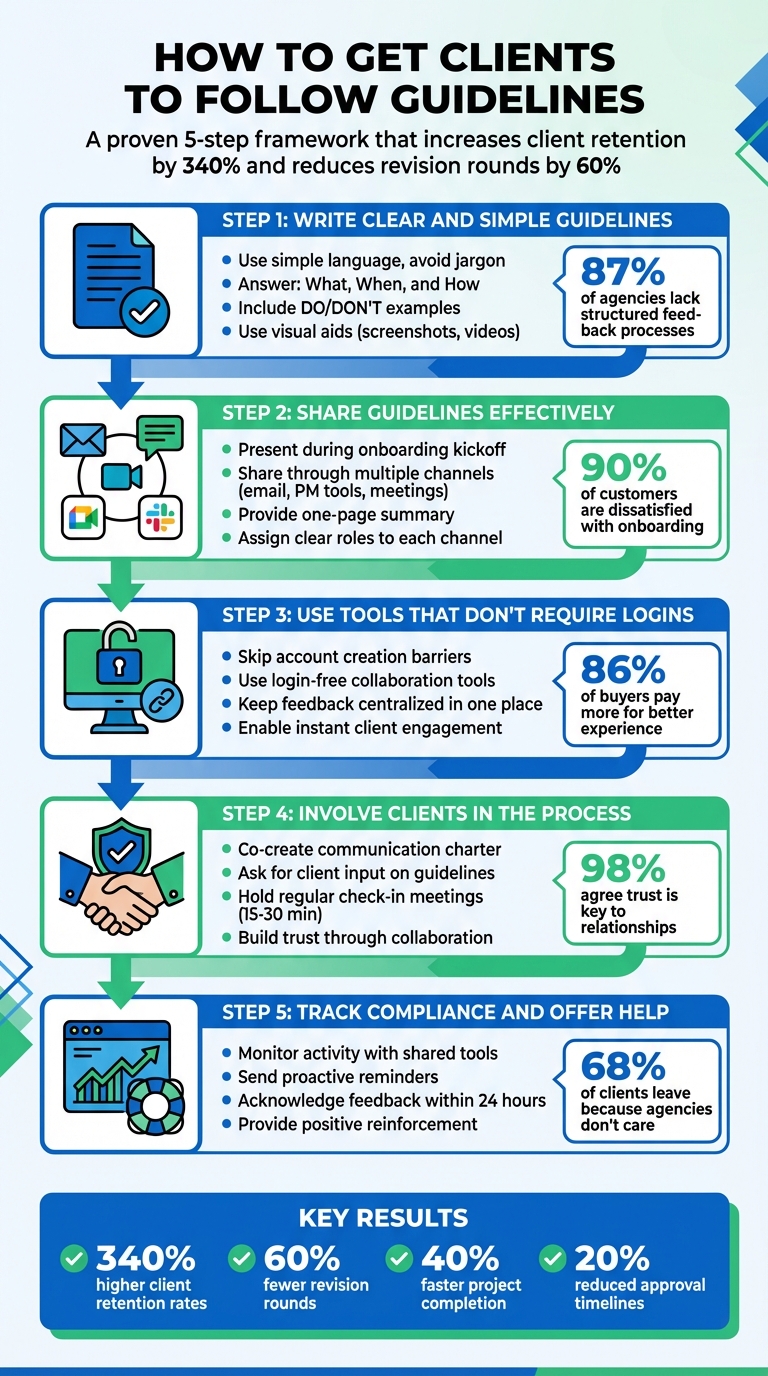
5-Step Process to Get Clients to Follow Project Guidelines
Inside a Digital Marketing Agency: Client Onboarding & Collaboration Workflow | Social Geeks Digital
sbb-itb-32f6eb2
Step 1: Write Clear and Simple Guidelines
One common pitfall for agencies is creating overly formal or complicated guidelines. Clients need instructions they can easily understand. Yet, a surprising 87% of agencies lack a structured process for gathering client feedback. Clear guidelines should address three essential questions: What should clients do, when should they do it, and how should they do it correctly? By establishing this clarity from the start, you can ensure smoother interactions and avoid unnecessary confusion throughout the project.
Set Clear Objectives and Expectations
Define specific deadlines for clients to submit revision requests after receiving drafts. Also, clarify which communication channels should be used for different purposes - such as email for formal approvals, project management tools for detailed revision notes, and chat for quick questions or clarifications. This proactive approach minimizes last-minute changes and reduces the likelihood of your team scrambling to meet deadlines.
"Boundaries do not push clients away; they create safety and predictability for everyone involved." - Creative Agency Success
Make expectations measurable. For instance, if designs require client approval, establish that a lack of response within a set timeframe will be treated as implicit approval. When clients understand the consequences of inaction, they are more likely to respond promptly.
Use Simple Language and Visual Examples
Avoid industry jargon - clients don’t need technical details; they just need clear, actionable steps. Agencies that use structured feedback systems have reported a 60% drop in revision rounds, thanks to simplified communication.
Kick off projects with a straightforward "DO/DON'T" guide. For example:
- DO: "The headline font should be 24pt instead of 18pt."
- DON'T: "Make it pop."
Incorporate visual aids like annotated screenshots or short screen-share videos to enhance clarity. For example, a design agency in July 2025 significantly reduced its average revision rounds - from 5–7 to just 2.3 - by introducing a visual example library and the CLEAR Method. This method (Clarify, Locate, Explain, Action, Result) helped projects finish 40% faster while cutting team overtime by 60%.
"The biggest challenge isn't the feedback itself - it's the translation." - Kyrylo Kozak, Author
Store all guidelines in a centralized location, such as a one-pager or an easily accessible portal. This eliminates the need for clients to dig through old emails, speeding up turnaround times and keeping everyone on the same page. With these streamlined guidelines in place, you’ll set the stage for an effective client onboarding process in the next step.
Step 2: Share Guidelines with Clients Effectively
Creating guidelines is only half the battle - getting clients to understand and follow them is just as important. How you present these rules can make or break the onboarding process. Research shows that 90% of customers are dissatisfied with the onboarding experience provided by companies. This highlights a missed opportunity for agencies to establish clear expectations from the very beginning.
Present Guidelines During Onboarding
The onboarding phase is your chance to set the tone for a smooth collaboration. Use the kickoff call to walk clients through your workflow, explain revision processes, and outline timelines for each phase. This is also the perfect time to review your guidelines, showcasing your organization and professionalism.
Provide an onboarding document that serves as a roadmap. It should introduce your team, define roles, list the tools you'll use, and outline immediate goals. Include a one-page summary that clearly spells out communication channels, response times, meeting schedules, and feedback policies. When clients have all this information consolidated, they’re less likely to send off-hours messages or miss deadlines.
"Accountability is not about being strict or demanding. It is about clarity, consistency, and structure." - Creative Agency Success
End each meeting by assigning clear next steps and deadlines. This ensures everyone leaves with a shared understanding and avoids unnecessary follow-ups.
To reinforce these expectations, use multiple methods to share the guidelines.
Share Guidelines Through Multiple Channels
Don't rely on a single point of communication. Incorporate your guidelines into key documents like the initial proposal, contract, and Statement of Work (SOW). Repetition across these touchpoints helps clients internalize the expectations.
Here’s a quick breakdown of how different communication channels can streamline your workflow:
| Channel Type | Recommended Use | Benefit |
|---|---|---|
| Formal updates, deliverables, and contract-related items | Creates a searchable, permanent record | |
| PM Tools | Task tracking, revision cycles, and file sharing | centralizes feedback to prevent "lost" messages using MarkUp.io alternatives |
| Meetings | Kickoffs, strategy sessions, and wrap-ups | Builds rapport and allows for in-depth discussions |
Assign clear roles to each channel. For example, use email for formal updates, project management tools for task tracking, and meetings for strategic discussions. If a client reaches out through an unapproved channel - like texting late at night - redirect them politely but firmly to the appropriate platform. This approach isn’t about being inflexible; it’s about creating a structure that benefits both sides.
Automated reminders can also be a lifesaver. Set them up to notify clients of upcoming deadlines, keeping everyone on track without constant manual follow-ups.
Finally, help clients see the value in these guidelines.
Explain How Guidelines Help Clients
Clients are more likely to follow rules when they see how those rules benefit them. Present your guidelines as tools that lead to faster approvals, fewer revisions, and quicker project completion. Explain how structured feedback ensures projects stay on schedule and within budget. When clients understand that these processes protect their investment, they’ll view guidelines as helpful rather than restrictive.
Poor communication is a major cause of distrust. That’s why explaining the reasoning behind your guidelines is crucial. Agencies with structured feedback processes report 340% higher client retention rates and 60% fewer revision rounds. These numbers prove that clients respond positively when they understand the system’s benefits.
"Your clients want structure - they just need you to provide it." - Your Agency Authority
During onboarding, emphasize that clients are part of the team, not just customers. This small shift in language turns the relationship into a partnership. When clients feel like collaborators, they’re far more likely to respect the processes and boundaries you’ve established.
Step 3: Use Tools That Don't Require Client Logins
One of the biggest reasons clients disengage is the unnecessary complexity of the tools they’re asked to use. When clients have to create accounts, remember passwords, or navigate confusing dashboards, their willingness to participate drops. In fact, 86% of buyers are willing to pay more for a smoother customer experience. Yet, many agencies unintentionally complicate things by prioritizing tools that are better suited for internal use rather than client convenience.
Skip the Login Hassle
Requiring clients to sign up for accounts or verify emails can create unnecessary hurdles. This often pushes clients to fall back on less efficient methods, like sending unclear texts or scattered emails. The fix? Use tools that allow clients to engage immediately - no sign-ups, no passwords, no extra steps.
For example, tools like Boast (https://boastimage.com) offer seamless client collaboration. With plans starting at just $9.95/month, Boast allows unlimited external collaborators on all paid tiers. Clients can simply click a shared link to start providing feedback - no accounts or training needed. Meanwhile, your team gets access to essential features like version control, task management, and Kanban boards to stay organized. This approach ensures that clients stay engaged without adding unnecessary costs or complications.
Once login barriers are removed, the next step is to simplify the feedback process even further by centralizing it.
Keep Feedback in One Place
A centralized feedback system can dramatically improve efficiency. When feedback is scattered across emails, messages, or spreadsheets, your team has to spend extra time piecing everything together. A single platform for all client comments eliminates this chaos.
Boast, for instance, organizes client input into threaded conversations tied directly to specific visual elements. It also tracks version history automatically and converts feedback into actionable tasks. Your team gets a live dashboard that updates in real time whenever a client submits input. This kind of streamlined system encourages clients to engage more fully, as they can provide feedback without frustration.
Agencies that adopt structured feedback tools report 60% fewer revision rounds and see 340% higher client retention rates. By making the process simple and intuitive, you not only improve efficiency but also strengthen client relationships.
Step 4: Involve Clients in the Process
Once you've streamlined your tools for feedback, the next step is to bring clients into the fold. By involving them in shaping the communication process, you can significantly boost their engagement and trust.
When clients have a hand in creating the guidelines, they're much more likely to stick to them. In fact, 98% of agencies and clients agree that trust is the cornerstone of strong relationships, and collaboration is one of the quickest ways to build that trust. When clients feel like active partners rather than passive recipients of rules, they’re less likely to push back.
Ask for Client Input on Guidelines
Instead of presenting clients with a pre-made rulebook during onboarding, make the process collaborative. Ask practical questions like, “What’s the best way for us to keep you informed?” or “Does this reporting schedule work for you?”. By involving them early, you turn the guidelines into something they’ve helped shape, not something imposed on them.
A great way to do this is by drafting a communication charter together. This simple document outlines key details such as primary contacts, preferred communication channels (like Slack or email), and expected response times. If a client suggests adjustments, follow up by showing exactly how their feedback has been integrated. This reinforces their role in shaping the partnership.
You can also guide clients on how to handle feedback more effectively. For example, encourage them to focus on overall goals rather than minor visual tweaks. This keeps their contributions meaningful and avoids unnecessary back-and-forth. Wrap up these discussions by confirming their priorities - “Your main concerns are X and Y. Did I get that right?” This small step prevents miscommunication and reassures them that their input is valued.
Once the guidelines are co-created, keep the momentum going with regular check-ins to ensure the process remains effective.
Hold Regular Check-In Meetings
Consistent, structured meetings help keep everyone aligned and address issues before they grow. Aim for a weekly or bi-weekly schedule, with each meeting lasting 15 to 30 minutes. Including this cadence in the initial contract can set clear expectations from the start.
"Accountability is not a one-time discussion; it is a consistent rhythm that guides your collaboration." - Creative Agency Success
A simple agenda works best: review previous action items, discuss progress and challenges, and assign new tasks with deadlines. Use a shared project tracker where both client and agency responsibilities are listed side by side. When clients see their names next to deadlines, they’re more likely to stick to the agreed guidelines.
Regular meetings also reduce the need for clients to send random emails or Slack messages throughout the week. When they know there’s a dedicated time to address their concerns, the urge to interrupt with ad-hoc questions diminishes. This routine fosters accountability on both sides and ensures the guidelines remain an active, evolving part of the relationship rather than a forgotten onboarding document.
Step 5: Track Compliance and Offer Help
Even the best guidelines need consistent monitoring and timely assistance. Tracking compliance isn’t about micromanaging - it’s about catching potential issues early and stepping in to help clients succeed. By identifying where clients may be struggling, you can address problems before they escalate into delays.
Monitor Client Activity with Shared Tools
Centralizing communication is key to spotting potential delays quickly. For example, Shane McEvoy from Flycast Media successfully reduced email volume by 40% and approval timelines by 20% by consolidating client communication onto a single platform. With this level of visibility, agencies can see when clients last reviewed deliverables, whether comments are left in the correct areas, and how many revision rounds a project has gone through. However, a staggering 87% of agencies still lack a formal system for managing client feedback and revisions.
For visual feedback on web pages, images, or PDFs, tools like Boast provide activity logs that show exactly when clients viewed files and left comments - no account setup required. This login-free approach eliminates a common barrier to client participation while giving you the tracking data you need to stay on top of progress.
If inquiries or feedback come through unapproved channels, redirect them back to your designated platform. A simple response like, “Please send this via our official channel,” helps keep communication streamlined.
Provide Ongoing Support and Reminders
Once you have a system to track activity, use it to provide timely support. Automated reminders before deadlines can make a big difference. As Creative Agency Success puts it:
"A proactive reminder is not pushy. It is professional. It demonstrates that you care about your client's success and that you are managing your project with intention".
When issues arise, address them immediately to keep the project on track and maintain a positive relationship. Acknowledge all client feedback or questions within 24 hours, even if you don’t have a full solution yet - this approach, often called the 24-Hour Rule, reassures clients that their concerns are being handled.
Positive reinforcement is also a powerful tool. A quick thank-you or acknowledgment when a client follows your guidelines or meets a deadline can go a long way in encouraging continued cooperation.
Here’s why this matters: 68% of clients leave agencies because they feel the agency doesn’t care, and 91% won’t return after a poor feedback experience. A shared tracker with clearly assigned deadlines can help maintain accountability and keep the process running smoothly without constant manual oversight.
Conclusion
Getting clients to follow guidelines isn’t about control - it’s about making things easier and ensuring compliance feels natural. Clear documentation, effective onboarding, and tools that eliminate unnecessary friction (like logins or complicated setups) make a world of difference. And the numbers prove it: agencies with structured feedback systems experience 340% higher client retention rates and 60% fewer revision rounds.
The trick is to approach guidelines as a service for your clients, not an obligation. For example, Flycast Media streamlined all communication into one platform, cutting email volume by 40% and reducing approval timelines by 20%. This gave clients a straightforward, hassle-free way to stay engaged.
Trust plays a huge role here - 98% of agencies and clients agree. But trust can erode quickly when communication becomes overly complex or inconsistent. By involving clients in the process, tracking compliance without hovering, and offering timely support, you create a partnership that keeps everything running smoothly.
FAQs
How do I get client buy-in without sounding strict?
To win client support without coming across as rigid, prioritize open and clear communication from the start. Lay out expectations early by defining boundaries such as revision limits and preferred feedback channels. This helps establish a shared understanding and avoids surprises later on.
Incorporate tools that make visual feedback easier - this can turn the process into a collaborative experience rather than an intimidating one. By highlighting transparency and focusing on shared objectives, you can build trust. This way, clients feel like active participants in the process, respected and valued, rather than micromanaged.
What should I do when clients ignore the agreed channel?
To tackle this, establish clear communication guidelines right at the beginning of the project. If a client steps outside the agreed-upon channel, gently remind them of the guidelines and explain how sticking to them helps streamline collaboration. By consistently reinforcing these boundaries, you can avoid delays, reduce miscommunication, and keep the project running smoothly - all while maintaining a professional and respectful relationship.
How can I track guideline compliance without micromanaging?
To keep things on track without micromanaging, tools like BoastImage can be a game-changer. It allows clients to leave clear, direct comments on designs or content, making it easier to monitor feedback and ensure everything aligns with expectations.
Set clear boundaries and document agreements right from the start - this creates a solid foundation and avoids misunderstandings. Regularly review and consolidate feedback to stay organized, and use version control to keep everything in check. This approach not only helps maintain oversight but also builds trust and encourages smooth collaboration.