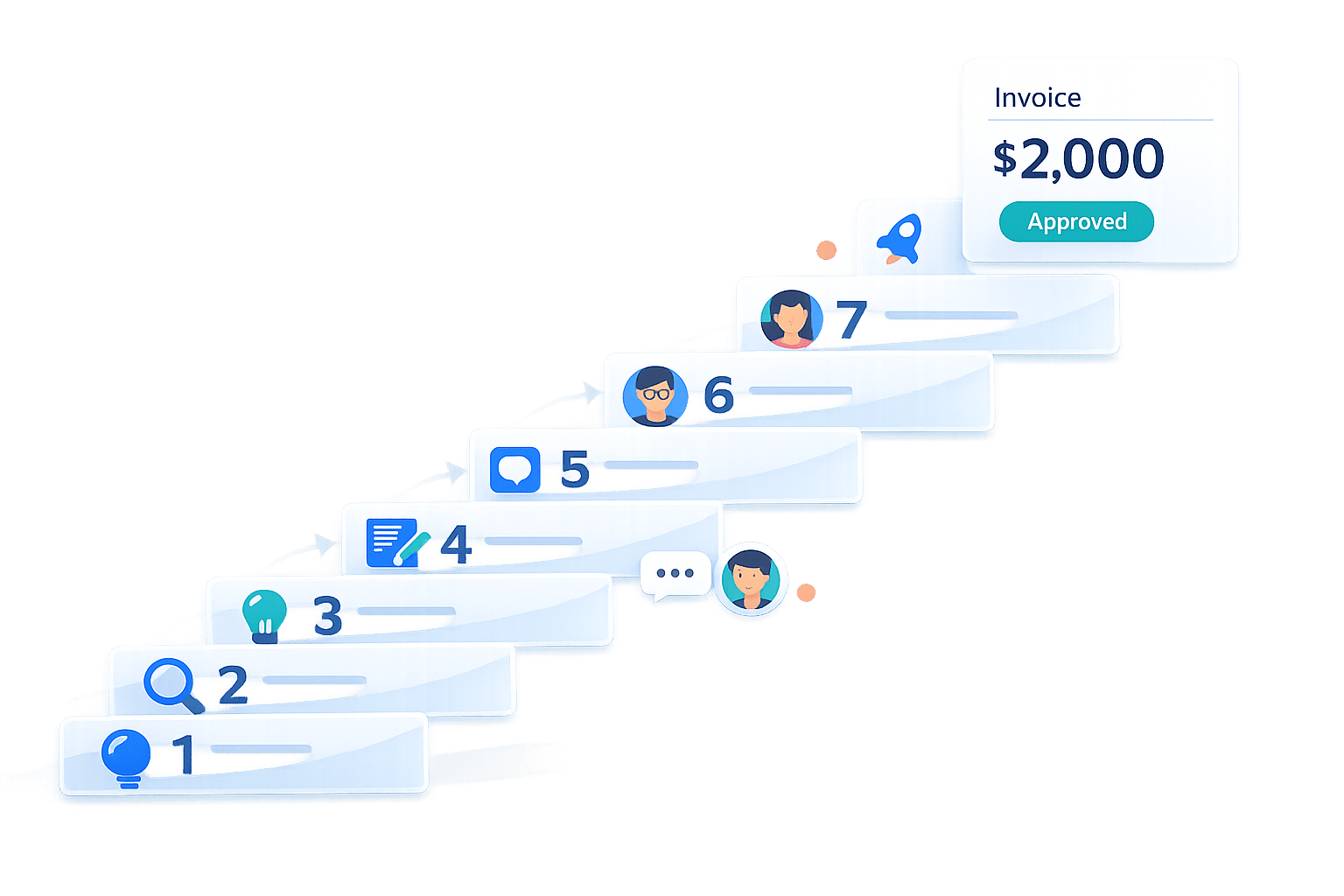
Complete Guide to Landing $2,000 Website Clients
In today’s fast-evolving digital marketplace, website developers often face a common dilemma: how to transition from simply creating websites for clients into running a full-fledged, scalable business that consistently attracts $2,000+ clients. For freelancers, creative agencies, and in-house teams, the challenge isn’t just about technical skills or creativity - it’s about understanding business fundamentals, positioning, and client attraction.
This guide, inspired by a detailed video tutorial by Alok Bhartiya, lays out a transformative step-by-step blueprint for website developers who want to escape the feast-or-famine cycle and grow a profitable, structured business.
The Problem: Why Website Developers Struggle
Many website developers remain stuck in a loop: they secure a project through word-of-mouth or social media, focus entirely on delivering it, and once completed, scramble to find the next client. This lack of a pipeline, lead-generation system, or business strategy leads to periods of stagnation.
As Bhartiya points out, most developers are skilled at "driving the car" (building websites) but fail to position themselves as business owners who can create an "Uber or Ola" for their services. Without proper positioning and systems in place, they’re forced to compete solely on price, reducing their value to commodity levels.
sbb-itb-32f6eb2
The Solution: A Step-by-Step Blueprint
Transitioning from "just a developer" into a successful website business owner requires a deliberate, strategic approach. Below, we outline the eight essential steps to create a scalable website development business based on insights shared in the video:
1. Define Your Niche and Positioning
To stand out, you must clearly define your target audience and industry focus. Bhartiya suggests starting with three key industries:
- Primary: Industries with consistent demand, such as healthcare or manufacturing.
- Secondary/Tertiary: Additional sectors like education, coaching, or local startups.
Your niche needs to focus on businesses with:
- Ability to Pay: Target businesses capable of investing in quality services.
- Repeat Demand: Industries with ongoing digital needs, such as lead generation or user engagement systems.
- ROI Awareness: Clients who understand the value of solving their digital challenges.
⚠️ Pro Tip: Avoid chasing clients with small budgets (e.g., $500-$1,000 projects) unless you have scalable upsell strategies.
2. Design Industry-Specific Landing Pages
Your website must cater to niche industries with tailored landing pages that speak directly to their challenges. For example:
- A landing page for gyms might highlight lead-generation systems that boost new memberships.
- A page for real estate businesses could emphasize fast-loading, SEO-friendly property listing tools.
Each landing page should include the following:
- Clear positioning statements
- Case studies and testimonials
- A visual explanation of your systems (e.g., customer attraction funnels)
- Strong calls-to-action like "Book a Free Digital Audit"
3. Develop Your Unique Selling Proposition (USP)
Stop presenting yourself as a "website developer." Instead, position yourself as a business partner offering systems that drive measurable results. Potential USPs include:
- SEO-friendly, fast-loading designs tailored to specific industries
- Chatbots or lead magnets that reduce drop-offs
- Conversion Rate Optimization (CRO) systems to improve sales
Explain how your services generate ROI for clients, whether through increased leads, faster load times, or improved brand visibility.
4. Build a Reliable Lead-Generation System
Bhartiya emphasizes the importance of both outbound and inbound strategies:
- Outbound:
- Daily personalized LinkedIn and Instagram outreach (20 DMs per day).
- Focus on selling "audits" rather than directly pitching websites.
- Inbound:
- Run Google Ads targeting high-value keywords (e.g., "real estate website design").
- Create educational content like blogs, case studies, and videos to attract organic traffic.
5. Master Discovery Calls
Discovery calls are a science. Use this step to deeply understand the client’s business, goals, and challenges. Bhartiya recommends asking high-impact questions like:
- What are your current lead-generation challenges?
- How much revenue are you losing monthly due to these problems?
- What’s your timeline for solving this issue?
By showing evidence (e.g., audits, competitive analysis, or data insights), you establish yourself as a trusted advisor rather than just another vendor.
6. Systemize Service Packages
To streamline operations and increase profit margins, develop standardized service packages:
- Startup Package: Basic 7-10 page website with lead-capture tools.
- Growth Package: Includes everything in the startup package plus CRM integration and lead funnels.
- Scale Package: Adds ongoing CRO services, speed optimizations, and monthly analytics reviews.
This approach caters to clients with varying budgets while encouraging upsells.
7. Deliver Results and Prove Your Value
Once you land a client, ensure you deliver measurable results through:
- Installing tracking tools like Google Analytics and heatmaps.
- Providing regular performance reports (e.g., traffic increases, conversion rates).
- Highlighting ROI impact through before-and-after comparisons.
Clients need to see that your services directly contribute to their business growth.
8. Focus on Retention and Upselling
The real money lies in ongoing engagements. Offer long-term maintenance plans, CRO services, or content creation packages to keep clients tied to your business. Some ideas include:
- Monthly blog updates or social media assets
- Regular performance audits and optimizations
- Paid ad management or email marketing campaigns
By positioning yourself as a long-term partner, you create a steady revenue stream while helping your client succeed.
Key Takeaways
- Niche Focus: Specialize in industries that have high-paying clients, repeat demand, and understand ROI.
- Positioning: Stop selling "websites" and start offering business growth systems.
- Tailored Landing Pages: Create niche-specific pages that directly address an industry’s pain points.
- Outbound and Inbound Strategies: Combine personalized outreach (DMs, calls) with search ads and content marketing.
- Discovery Calls: Ask insightful questions to demonstrate your expertise and build trust.
- Service Packages: Offer tiered pricing (e.g., startup/growth/scale) to target varying budgets.
- Prove ROI: Use analytics and case studies to showcase tangible results.
- Retention is Key: Upsell services like CRO, ad management, or content creation to maintain long-term relationships.
- Invest in Yourself: To grow, invest in learning skills like marketing, sales, and business strategy.
- Track Performance: Continuously monitor KPIs and make data-driven improvements.
Conclusion
The path to building a sustainable, high-paying website business isn’t just about creating stunning designs. It’s about understanding business fundamentals, positioning yourself as a results-driven partner, and creating systems that consistently attract and retain clients.
By implementing the eight-step framework outlined in this article, you can break free from the unpredictable freelance cycle and build a scalable, profitable business that stands out in today’s competitive landscape. Remember, success takes time and structure, but the rewards are well worth the effort.
Source: "No Portfolio, No Upwork, Still Closing $2,000 Website Projects" - Alok kumar Badatia, YouTube, Jan 30, 2026 - https://www.youtube.com/watch?v=u_Xd9r4gb4w