
What to Ask During Client Onboarding
Starting a project on the right foot means asking the right questions during onboarding. It’s not just about gathering information - it’s about setting expectations, avoiding miscommunication, and building trust. Here’s what you need to focus on:
- Basic Business Details: Get the official business name, website, brand assets, and contact roles to streamline communication.
- Legal and Financial Info: Clarify payment terms, budgets, tax details, and financial decision-makers early.
- Goals and Success Metrics: Understand the client’s objectives, past efforts, and how they measure success. Ask about short-term goals, long-term vision, and baseline data.
- Target Audience: Go beyond demographics to learn about their audience’s pain points, habits, and preferences.
- Current Resources: Audit existing tools, workflows, and content to avoid delays and identify gaps.
- Budget and Timeline: Confirm financial constraints, project scope, and deadlines tied to key events or milestones.
- Feedback Process: Agree on communication channels, feedback tools like Boast to get clear, actionable feedback, and timelines for reviews and approvals.
A structured onboarding process not only saves time but also ensures smoother collaboration and fewer surprises down the line.
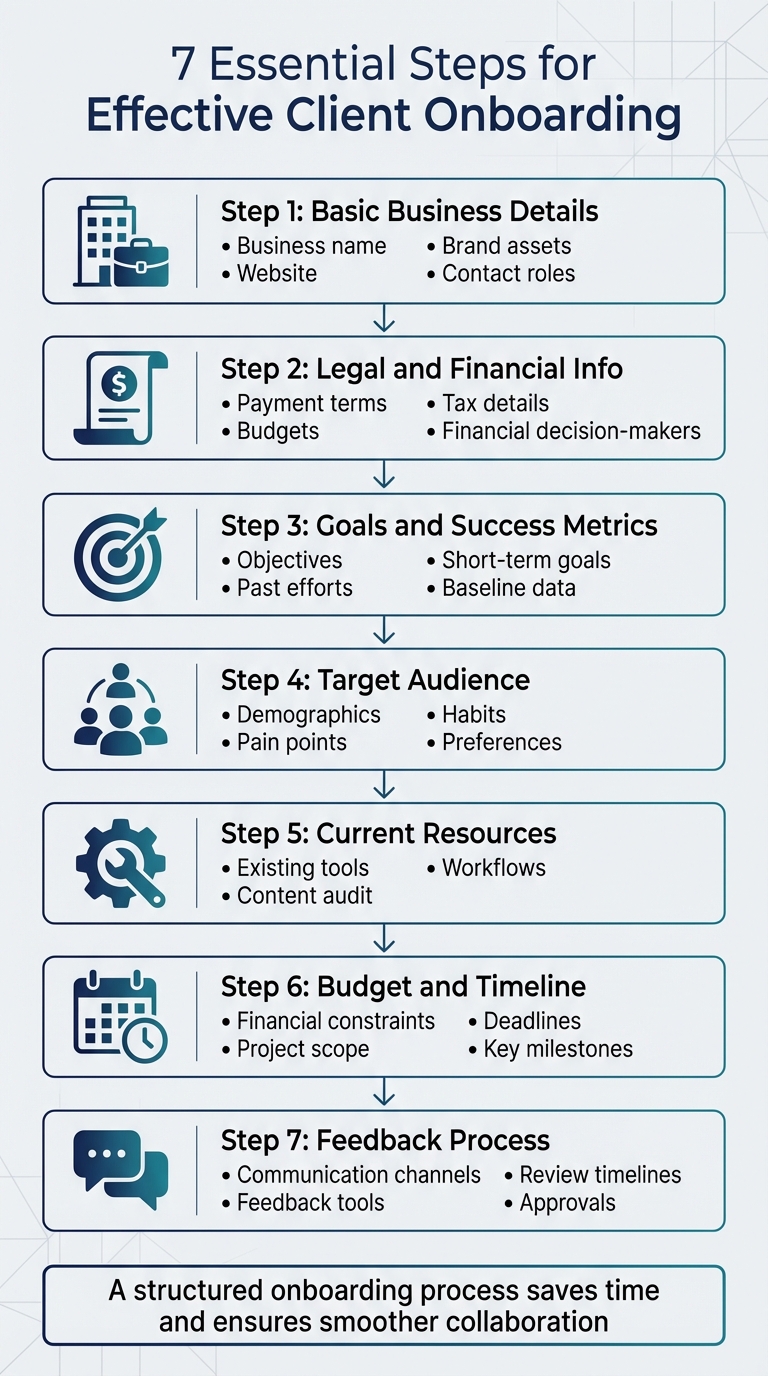
7 Essential Steps for Effective Client Onboarding
What to Ask in a NEW CLIENT Questionnaire (Onboarding Questionnaire)
sbb-itb-32f6eb2
Collecting Basic Business Information
The first step in onboarding is gathering key details about your client's business. Getting the official business name and website URL ahead of your first meeting gives you a chance to research their industry and understand their market position.
Business Profile and Contact Information
Start by asking for the official business name and how they prefer it to be presented. This is especially important if their legal name (used for contracts and invoices) differs from the name they use in marketing. Some businesses operate under a DBA (Doing Business As) that’s distinct from their registered name.
To avoid delays, request brand assets - like logos, fonts, and style guides - as part of your onboarding questionnaire. Also, ask clients to describe their business in their own words. This helps you understand their tone, key selling points, and the values they want to highlight.
For contact details, identify both primary and secondary contacts and clarify their roles. Who handles task execution? Who approves deliverables? Who provides feedback or receives updates? Defining these roles upfront ensures smoother communication and quicker decision-making.
Legal and Financial Details
Beyond basic information, it’s crucial to address legal and financial matters early in the process. Gather essential tax and billing details, such as Tax IDs (e.g., W-9 forms for U.S.-based businesses), business structure information, and preferred payment methods. Whether they pay hourly, by fixed fees, retainers, or milestones, secure file upload tools can help protect sensitive financial documents.
Determine whether the budget has already been approved or if it requires additional internal review. As FileRequestPro points out:
"Money and deadlines are uncomfortable topics. Asking upfront in a questionnaire is easier than raising them in conversation - and it prevents the single biggest source of client dissatisfaction: mismatched expectations on cost or delivery dates"
– FileRequestPro
Finally, confirm who has the authority to make financial decisions and find out which accounting software they use, such as QuickBooks or Xero. This ensures billing can be integrated smoothly into their existing systems.
Understanding Goals and Objectives
Once you've gathered the basic details, it’s time to dig deeper into the client’s main objective. Start by asking, "What specific problem are you trying to solve?" This question often uncovers their real motivation. From there, work on clearly defining what the client hopes to achieve.
What the Client Wants to Achieve
Encourage clients to separate their short-term goals (6–12 months) from their long-term vision. This ensures that immediate actions align with their broader strategy.
To prioritize effectively, ask them to rank their top three goals. This will help direct resources to what matters most. Additionally, inquire if they’ve tried solving this problem before and what the results were. Understanding past efforts can help you avoid repeating missteps and refine your approach.
How Success Will Be Measured
Clear success metrics are essential to avoid misunderstandings or shifting expectations. Ask, "What does success look like to you?" and push for specific, measurable outcomes. Request baseline data from tools like Google Analytics, Google Search Console, or previous campaigns. Also, explore their expectations for quick wins within the first 30 days. Finally, identify any "non-negotiables" to establish firm boundaries and ensure alignment , often by using a visual feedback tool to streamline communication.
Who the Target Audience Is
Go beyond surface-level demographics to truly understand the audience. Ask about their pain points, fears, and desires - these are the factors that drive their decisions. Identify any potential barriers to purchase. Dive into their digital habits by asking which social platforms they use most and reviewing common customer FAQs. This can uncover communication gaps or opportunities. Lastly, request the top 3–5 unique selling points and clarify their preferred brand tone. This will help you better position their brand in the market.
Reviewing Current Resources and Workflows
Before crafting a strategy, it's essential to audit the tools, assets, and workflows already in place. A HubSpot survey reveals that 62% of agencies find onboarding takes longer than it should. By evaluating current client resources and workflows, you can streamline the onboarding process and avoid common pitfalls.
Tools and Platforms Already in Use
Start by asking clients to document their entire tech stack, covering project management, marketing, CMS, financial systems, and any industry-specific platforms. Ensure you have access credentials and the permissions required for setup. This step helps avoid technical roadblocks later on.
As Jarrod Harman, Director at Business Warriors, explains:
"Getting familiar with the client's existing infrastructure prevents avoidable setup issues later on during onboarding".
Courtney Murdoch, Marketing Strategist at Pixel Fire Marketing, reinforces this:
"Timely onboarding is essential. Without access to the client's GBP and social accounts, the entire onboarding process can come to a halt".
Additionally, ask whether the client is interested in automating any repetitive tasks. Once the technical framework is clear, shift focus to creative and strategic assets.
Assets and Materials on Hand
Request all visual identity assets upfront - logos, style guides, fonts, and hex color codes. This avoids delays down the road. Also, gather existing content such as blog posts, case studies, whitepapers, videos, and sales materials that could be repurposed.
Send this request immediately after the contract is signed to leverage the client's initial enthusiasm. Use a centralized file collection tool instead of email to avoid losing attachments. It’s also smart to ask for any additional materials they might not think to share initially.
Strategic materials are just as important. Ask for content calendars, unique selling points, mission statements, and records of past campaign performance. Screenshots of analytics and existing SEO audits can provide valuable insights. HoneyBook advises:
"By asking about brand and asset details upfront, you won't be stuck chasing the client down for font types or primary brand colors when they're out of the office".
Problems with Current Processes
To uncover bottlenecks, ask, "What didn’t work with your previous provider?" This can highlight issues like poor communication, clients ghosting feedback tools, or technical challenges. Another useful question: "How could this process fail?" This often reveals overlooked gaps in resources or approval workflows.
Some common pain points include scattered information across lengthy email threads or fragmented communication through Slack. Be sure to discuss internal team handoffs, approval hierarchies, and any frustrations from past consulting experiences.
Stewart Dunlop, CEO of LinkBuilder.io, puts it plainly:
"Client onboarding sets the tone for the entire engagement... If you have a beautiful sales process but fail to meet expectations with onboarding, then you're starting the relationship off on the wrong foot".
Setting Budget, Timeline, and Expectations
Getting clear on budget, deadlines, and feedback processes early on can save everyone a lot of headaches. Ideally, these conversations should happen before the contract is signed to make sure both sides are aligned from the start.
Budget and Project Scope
The first step is to confirm the client’s budget and whether it’s fixed, flexible, or still being finalized. For marketing projects, it’s important to clarify both the agency fees and the client’s ad spend. This avoids confusion later, especially when campaigns begin to scale. As Megaphone Marketing explains:
"This is important so we know if and when to scale marketing efforts in order to grow the client's business more", especially ad spend.
It’s also helpful to ask about the client’s profitability threshold - the point where they see increased marketing investment as worthwhile. This ensures your budget recommendations align with their financial goals. Beyond money, don’t forget to ask about non-financial constraints like approval processes or compliance requirements.
Zeke Domowski, CEO of Creatively Innovative, offers some practical advice:
"Do not ask for a target cost per lead or a range at the post-sales question. Get that out of the way in pre-sales to see if it even makes any sense".
He also cautions:
"Avoid sending the onboarding questionnaire until AFTER you have received payment and signed the terms and conditions. Sending too much stuff upfront will get things done out of order, and you may not get paid".
These details are just as important as understanding the client’s business goals. Once the budget and scope are set, the next step is to lock in deadlines and milestones.
Deadlines and Key Milestones
Start by determining when the client wants the project completed. Make sure to distinguish between flexible deadlines and those tied to critical events like product launches, regulatory filings, or board meetings. As FileRequestPro puts it:
"A product launch, regulatory filing, or board meeting creates a non-negotiable deadline you need to plan around".
It’s also crucial to set deadlines for the client to provide necessary assets, feedback, or approvals. Without these, projects can get stuck in limbo. To stay ahead, build internal team milestones that are slightly earlier than the client’s deadlines. This buffer gives you time to handle any unexpected delays.
Here’s a quick look at how automation can speed up onboarding timelines across different agency types:
| Agency Type | Typical Onboarding Time | With Automation |
|---|---|---|
| Marketing agencies | 2-3 weeks | 3-5 days |
| Web development | 2-4 weeks | 5-7 days |
| SEO agencies | 1-2 weeks | 2-3 days |
| Design agencies | 1-2 weeks | 2-4 days |
(Source: OnboardFlow)
How Feedback and Updates Will Work
Once deadlines are set, it’s time to discuss how progress updates and feedback will be handled. Some clients prefer weekly updates, while others are fine with milestone-based reports. Find out what works best for them and agree on communication channels. Clear communication here can prevent delays caused by vague feedback or miscommunication.
For visual projects like websites or design mockups, tools like Boast (https://boastimage.com) can reduce design revision cycles. Clients can click a link and leave comments directly, without needing to create an account or go through onboarding. Meanwhile, your team can manage workflows with Kanban boards, task lists, and version tracking behind the scenes. This approach ties in well with the streamlined onboarding process mentioned earlier.
Finally, set clear expectations for how long client reviews and approvals should take. Document these agreements to keep everyone accountable and handle any timeline shifts smoothly.
Setting Up Visual Feedback Tools
Making Feedback Easier with Boast
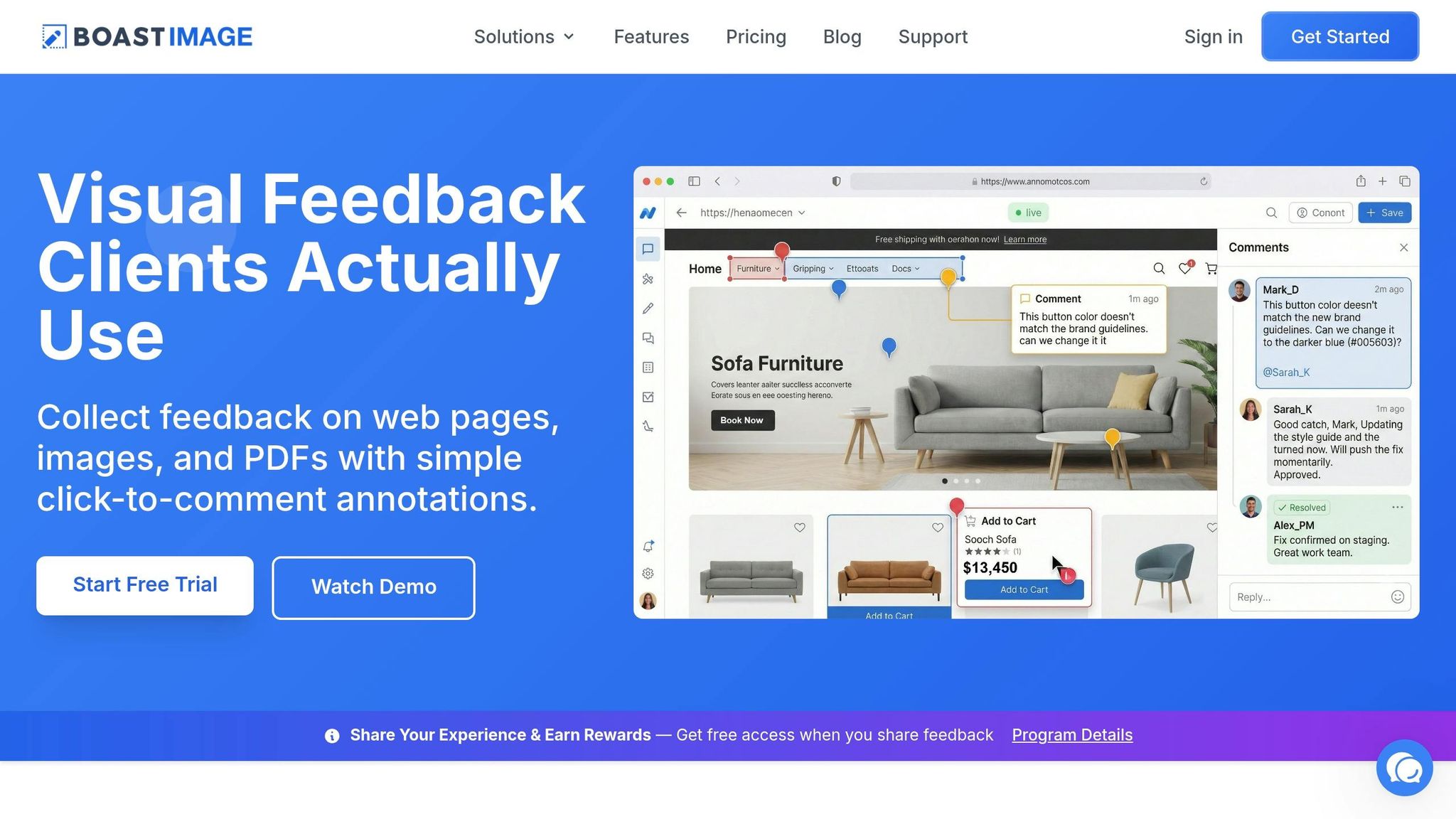
One common reason projects hit roadblocks during client onboarding is the difficulty clients face with feedback tools. If clients are required to create accounts, remember passwords, or navigate complicated dashboards just to leave a comment, they often skip the tool altogether and send unclear emails instead. This is why discussing feedback preferences early on - and providing a simple solution - can make a huge difference.
Enter Boast (https://boastimage.com). This tool eliminates those hurdles. Clients can click a link and comment directly on web pages, images, or PDFs - no account creation required. As noted by FileRequestPro, “A good client onboarding questionnaire does two things: it collects the information you need to start working, and it shows the client you run a structured, professional process”. A login-free feedback tool like Boast reinforces that professionalism while making things easier for clients.
To maximize its effectiveness, include Boast in your initial welcome package or "Working with Us" guide. Introducing it early sets clear expectations and positions Boast as your go-to feedback hub. This keeps project comments organized and avoids the chaos of scattered email threads. Considering that 90% of clients believe companies could improve their onboarding processes, offering a smooth feedback experience can set you apart right from the start.
Managing Approvals and Revisions
Once client feedback is simplified, it’s equally important to streamline your internal approval process. While clients benefit from an easy commenting system, Boast also offers tools like version control and Kanban boards to help you stay on top of revisions, track multiple iterations, and manage approvals efficiently.
Incorporate this into your onboarding workflow to maintain consistency for every client. Set clear deadlines for feedback at critical milestones and use Boast’s Kanban view to monitor the status of reviews. This structured approach ensures no detail is overlooked, keeping projects on track and stress-free.
Conclusion
Getting client onboarding right isn’t just about ticking boxes on a form - it’s about laying the groundwork for a strong, successful partnership. A well-thought-out onboarding questionnaire shows professionalism, sets clear boundaries, and helps avoid missteps that could disrupt the project later.
Consider this: improving customer retention by just 5% can increase profits by as much as 95%, and a solid onboarding process can boost retention rates by up to 50%. By asking the right questions upfront - whether it’s about business goals, target audiences, budgets, or feedback preferences - you not only set clear expectations but also reduce the chances of costly misunderstandings. Pairing this approach with tools like Boast for visual project analyzer can make your onboarding process both clear and efficient, giving you a distinct edge.
Spending time on a detailed onboarding process reassures clients they’ve made the right decision and builds a foundation of trust that supports smooth collaboration from the very beginning.
FAQs
What should I ask first in client onboarding?
To kick things off, collect key business details to get a clear picture of the client’s goals. Dive into their company background, learn about the range of products or services they offer, and pinpoint their main objectives. This step helps lay a solid groundwork for the project, ensuring everyone is on the same page right from the start.
How do I define success metrics with a new client?
When working with a new client, it’s essential to identify clear, measurable indicators that reflect their goals and expectations. Start by discussing their objectives during the onboarding process. This conversation lays the groundwork for setting key performance indicators (KPIs) that might include project milestones, adherence to timelines, and overall client satisfaction.
Beyond these, you can also monitor factors like engagement levels, responsiveness in communication, and the quality of feedback provided. These metrics not only help track progress but also ensure both parties stay aligned throughout the collaboration.
Establishing these measures from the beginning creates a framework for evaluating success and builds the foundation for a strong, lasting partnership.
How can I get faster, clearer client feedback without logins?
Simplifying client feedback can be a game-changer, and tools that allow loginless commenting make the process much easier. Take BoastImage, for example - it lets clients add comments directly on web pages, images, or PDFs without needing to create an account. This not only saves time but also eliminates unnecessary back-and-forth.
Another great way to streamline feedback is by using structured onboarding questionnaires. These forms focus on project goals and expectations, helping you understand client needs right from the start. The result? Fewer misunderstandings and quicker, clearer feedback.