Client Ghosting: Signs and Solutions
Client ghosting happens when a client suddenly stops all communication, leaving projects stalled and revenue impacted. This common issue can arise due to unclear expectations, budget concerns, or clients feeling overwhelmed. Recognizing early warning signs like delayed responses, vague feedback, or missed deadlines can help you address the problem before it escalates.
Key takeaways:
- Why it happens: Misaligned expectations, financial concerns, or busy schedules often lead to ghosting.
- Warning signs: Slower replies, unclear feedback, and skipped meetings are early indicators.
- Prevention tips: Set clear communication guidelines, discuss budgets upfront, and use a website feedback tool to simplify reviews.
- Re-engagement strategies: Send polite follow-ups, reference contract terms, and explore alternative contact methods.
Bottom line: Clear communication, proactive planning, and structured processes can minimize client ghosting and protect your business.
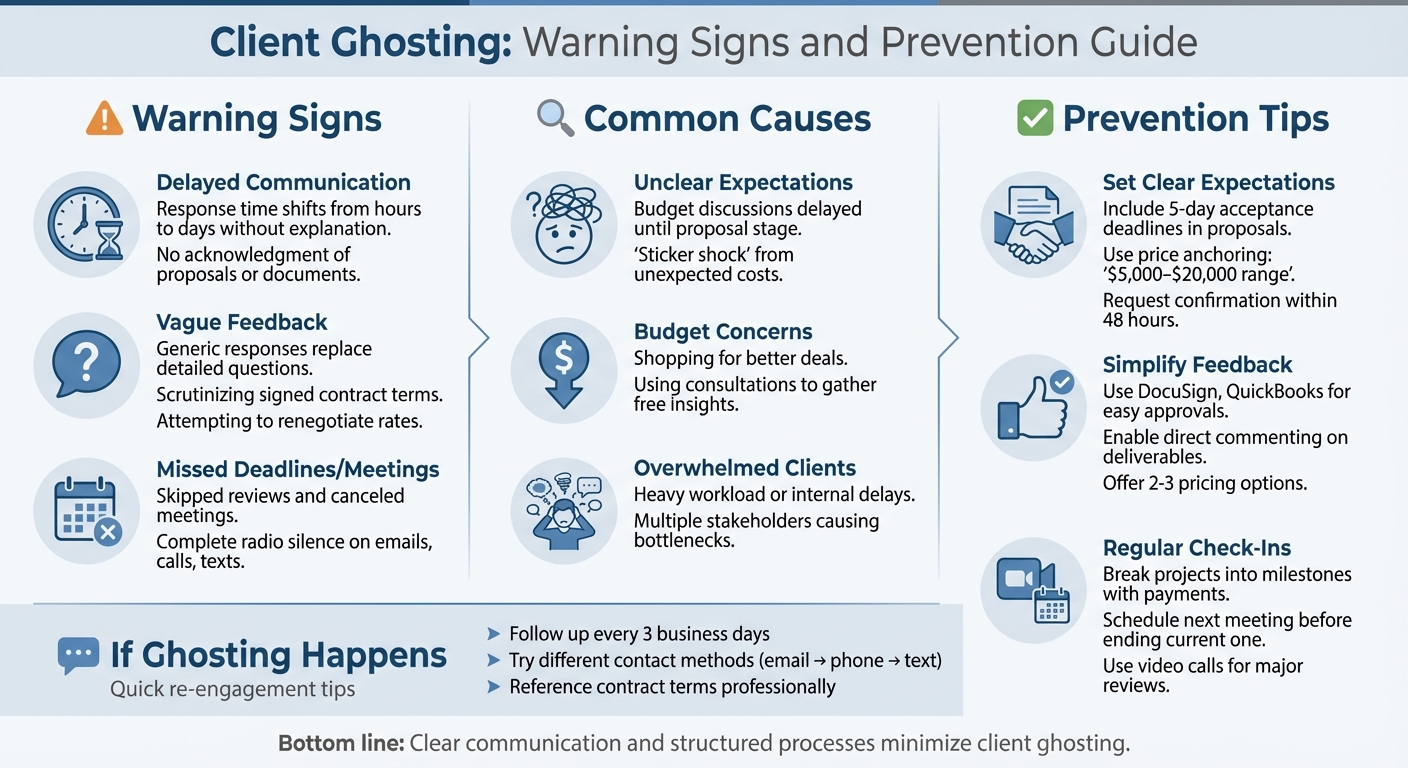
Warning Signs and Prevention Strategies for Client Ghosting
Here's why clients are ghosting you (and how to fix that)
sbb-itb-32f6eb2
Warning Signs of Client Ghosting
Recognizing the early signs of a client pulling back can save you a lot of time and frustration. While the clues may start off subtle, they often follow a predictable path. Here are some key behaviors to keep an eye on during your client interactions.
Delayed Communication
One of the first red flags is a noticeable change in how quickly a client responds. If someone who used to reply within hours suddenly takes several business days without offering any explanation, it could indicate shifting priorities. For example, if you send a proposal and don’t hear back within a day or two - even just to confirm receipt - it might point to concerns about budget or a lack of interest in moving forward. Freelance Designer and Developer Matt Olpinski highlights this pattern perfectly: when a client says something polite like, "Thanks! We'll review everything next week and get back to you!" but then vanishes for weeks, it’s often a sign that ghosting is on the horizon.
Vague or Incomplete Feedback
Another warning sign is when a client’s feedback becomes less specific. If they stop asking detailed questions and start providing unclear or generic responses, their interest may be fading. B2B ghostwriter Naomi Nakashima warns that clients who suddenly begin "scrutinizing or questioning the terms of the contract after it's already been signed" might be looking for an exit. Similarly, if their once-enthusiastic communication about timelines, budgets, or next steps turns vague, it’s worth noting. Other troubling behaviors include trying to renegotiate your rates or using pushy tactics, which can be precursors to a breakdown in communication.
Missed Deadlines or Meetings
When clients start skipping deadlines or canceling meetings, it’s a major red flag. For example, if they miss a scheduled review and only resurface later with minor edits and vague reassurances, it could point to internal problems like financial struggles or organizational changes. The most concerning sign, however, is when a previously responsive client becomes completely unreachable - ignoring emails, calls, and texts - especially when their input is critical to keeping the project on track. That level of silence often signals the end of the road.
Why Clients Stop Responding
Understanding why clients stop responding can help you address and even prevent these situations. By pinpointing the causes of ghosting, you can take proactive steps to keep communication flowing. Here are some of the most common reasons clients go silent:
Unclear Expectations
When expectations aren’t clearly defined, clients can easily become confused or frustrated, leading them to disengage. Miscommunication about project details often leaves clients unsure about what they’re getting. As Matt Olpinski, a freelance UI and UX designer, explains:
"If a freelance client is surprised by the cost of the project, it's because you didn't adequately discuss their budget or your pricing, and only included those details in the proposal."
This "sticker shock" often happens when budget discussions are delayed until the proposal stage. Without clear early alignment - like explaining the next steps for signing a contract, making payments, or providing feedback - clients may feel blindsided and choose to disengage. Establishing a clear feedback process early on can mitigate this risk.
Another common reason for ghosting is related to financial concerns.
Budget or Scope Concerns
Money matters often play a big role in client ghosting. A client’s budget might be unexpectedly reduced, or they could be shopping around for a better deal. Sometimes, clients use initial consultations to gather insights and then disappear without committing.
Samuel Szuchan, founder of SamSzu.com, highlights this issue:
"The SEO agency could have saved a ton of time simply being up-front with their pricing... Being open with their expensive pricing may net them fewer leads overall but will yield leads of much higher value."
When financial terms are introduced too late, clients may feel uncomfortable voicing their concerns and instead choose to ghost.
But not all ghosting is about money - sometimes, it’s about time.
Overwhelmed or Busy Clients
In some cases, ghosting isn’t intentional. Clients may simply be overwhelmed with their workload or dealing with internal delays. As Amabaie, Independent Contractor, puts it:
"People disappear all the time."
This can happen when multiple stakeholders are involved, or when urgent business matters push your project down the priority list. Additionally, the online disinhibition effect - the tendency to feel less accountable in digital communication - can make it easier for busy clients to ignore emails or feedback requests.
How to Prevent Client Ghosting
Preventing client ghosting starts with proactive measures. By streamlining your workflow and setting clear expectations from the very beginning, you can reduce the chances of clients disappearing mid-project.
Set Clear Communication Expectations
Clarify communication and deadlines early on to avoid misunderstandings. For example, UI/UX designer Matt Olpinski uses precise language in his proposals: "If [business name] accepts this proposal within 5 days, I can begin work as early as January 15th, 2025." This creates a sense of urgency while keeping the process stress-free, ensuring your calendar isn’t left in limbo.
During discovery calls, use price anchoring to establish a financial range upfront. For instance, you might say, "The project will cost no less than $5,000 and up to $20,000." This helps weed out clients who may not be able to afford your services, avoiding awkward surprises later.
Another tip: request confirmation for every document you send. If you don’t hear back within 48 hours, follow up three business days later. Additionally, agree on protocols for specific scenarios - like payment delays or scope changes - so clients know when silence is unacceptable. These steps create a smoother process for both parties.
Make Feedback Easy to Give
Streamlining feedback is another way to keep projects moving. Tools like DocuSign or QuickBooks simplify approvals and payments, allowing clients to complete tasks with just a few clicks, eliminating the hassle of printing or scanning.
When it comes to creative work, feedback can be a sticking point. Clients may struggle to articulate their thoughts on design files or web pages. This is where tools like BoastImage can help. With BoastImage, clients can click on specific elements and leave comments directly - no logins or account setups required. Starting at $9.95/month for the Solo plan, it’s an affordable way to remove technical barriers that can slow feedback.
For major deliverables, consider presenting over live video calls instead of just sending files. Real-time discussions allow you to address concerns immediately, reducing the chance of misunderstandings that might lead to ghosting. Another tip: offer 2–3 pricing options in your proposals. This helps clients focus on your tailored solutions rather than getting stuck on a single number.
By making feedback simple, you set the stage for consistent communication.
Schedule Regular Check-Ins
Breaking your project into milestones with clear payments and check-ins can keep clients engaged. B2B ghostwriter Naomi Nakashima explains, "By setting up regular milestones with smaller payments, you increase interaction with the client (they are less likely to ghost on you if you've become friends through the process) and you'll be able to collect most of the money owed to you."
Video calls are especially effective for initial meetings and major reviews. Former CMO Ksenia Larina notes, "It is more difficult for a contractor to turn you down once they saw your face and spoke to you in person." This personal connection makes it harder for clients to disappear.
Always end meetings or emails by scheduling the next check-in. Before sending documents for review, ask about potential delays like holidays or internal reviews. This proactive approach keeps communication on track and prevents unnecessary gaps.
How to Re-Engage Clients Who Have Ghosted
When communication with a client comes to a halt despite your best efforts, there are ways to re-establish contact effectively.
One key approach is to maintain a digital paper trail. This includes keeping records of all emails or messages you send. Not only does this help you stay organized, but it also serves as documentation if legal action becomes necessary. Christina Scalera from The Contract Shop explains:
"Staying in communication with your client is also a smart idea because then your attempts at contacting them are on the record. Think of them as a digital paper trail."
Try Different Contact Methods
Start by reaching out through email, as it's often the least intrusive. If that doesn't work, move on to phone calls or text messages. These more direct methods can help overcome the disconnect that sometimes happens online. However, avoid using unfamiliar platforms or methods you haven't used with the client before - this could come across as invasive.
Send a Polite Follow-Up
When following up, keep your tone professional and polite. Begin with a gentle nudge every day or two. If there's no response, space your follow-ups to every three business days. Gradually increase the firmness of your messages, but remain courteous. For instance, you could say, "I can hold your project slot for the next 5 business days. After that, I'll need to adjust our start date to accommodate other clients." This approach introduces urgency without being pushy.
Review Contract Terms
Referencing your contract can be an effective way to remind clients of their obligations. Highlight agreed-upon details like payment schedules, communication expectations, or cancellation policies. As Naomi Nakashima points out, even mentioning potential legal action can sometimes prompt a response. Alternatively, you could offer a small incentive to encourage payment, such as a 3% discount for invoices settled within 24 hours.
To make re-engagement even smoother, consider using tools that simplify communication. For instance, platforms like BoastImage and MarkUp.io allow clients to provide feedback or comments directly, without needing to create an account. This removes barriers and makes it easier for clients to reconnect.
Protecting Your Business and Well-Being
When a client disappears without warning, the ripple effects can hit hard. Beyond just delayed payments, it can throw off your schedule, disrupt your income, and even take a toll on your mental health. Handling these situations effectively requires safeguarding your timelines, keeping thorough records, and protecting your energy.
Create Backup Timelines
Set clear acceptance deadlines in your proposals. For example, include a five-business-day deadline for accepting the proposal, along with a buffer day or two for unexpected delays. Freelance designer and developer Matt Olpinski uses language like: "If [business name] accepts this proposal within 5 days, I can begin work as early as January 15th, 2025." This approach keeps your schedule flexible and guilt-free if the client doesn’t respond, allowing you to focus on other opportunities. It’s a simple way to maintain control over your projects and reduce unproductive downtime.
Adopt a "stop work" policy as well. If a client fails to pay or respond to clear, actionable feedback, halt work immediately. Independent contractor Amabaie sums it up perfectly: "They stop paying, you stop working." This boundary ensures you’re not wasting time or resources on a project that may never get completed.
Document All Communication Attempts
Keep a detailed record of every email, text, call, and message. This not only shows professionalism but also provides evidence if you need to escalate the situation or re-engage the client.
Leverage tools like DocuSign, HelloSign, or QuickBooks to track when proposals or invoices are opened, viewed, or signed. When following up, reference specific contract terms to reinforce the professional nature of your relationship and establish a documented trail. If you ever need to issue a demand letter or consider legal action, these records will be invaluable. However, if repeated attempts to reach the client fail, it’s essential to recognize when it’s time to step back and move on.
Know When to Walk Away
Not every client relationship is worth salvaging. If a prospect is overly aggressive during negotiations, refuses to pay a reasonable deposit, or frequently questions signed contract terms, these are clear warning signs. Walking away early can save you from bigger issues down the road.
When clients miss deadlines or stop payments, you’re well within your rights to close the project and move on. Before doing so, send a final, professional email stating that due to a lack of response, you’re assuming the project is no longer a priority and will focus on other commitments. This often prompts a reply from genuinely busy clients while giving you a clean break if they remain silent.
Think twice before pursuing legal action, unless the amount owed is substantial. Amabaie advises: "I can't see a possible upside of going to court. It takes time, money and stress to go to court. Your business, family life and possibly your health will flounder in the process." For most freelance projects, the financial and emotional costs of court far outweigh any potential recovery. Sometimes, the best decision for your well-being and business is to cut your losses and focus on clients who genuinely value your work. Proactively managing your time and energy, while knowing when to let go, is key to protecting both your business and your peace of mind.
Conclusion
Client ghosting often starts with subtle signs: delayed replies, vague feedback, or missed deadlines. These red flags can easily slip under the radar, especially when you're managing multiple projects. The causes, however, are often predictable - unclear expectations, budget constraints, or clients feeling overwhelmed. As UI/UX designer Matt Olpinski explains:
"If a potential freelance client pulls a disappearing act, it's likely because you didn't establish enough trust and rapport with them."
The best way to prevent ghosting is to set clear expectations from the beginning. Define the scope, budget, and timeline upfront, and consider breaking the project into milestones with corresponding payments. B2B ghostwriter Naomi Nakashima highlights the value of this approach:
"By setting up regular milestones with smaller payments, you increase interaction with the client... and you'll be able to collect most of the money owed to you."
Minimizing friction in your workflow can also make a big difference. Use tools like electronic signatures, offer multiple payment methods, and simplify design feedback processes to keep clients engaged. By reducing administrative hurdles, you leave clients fewer excuses to go silent. But if ghosting does happen, having a structured re-engagement plan is key.
Re-engagement requires both persistence and professionalism. Try switching communication channels, follow up politely every three business days, and reference contract terms to remind clients of their commitments. However, if repeated attempts fail, it’s important to know when to step back. Protecting your time and energy is just as critical as maintaining client relationships.
Streamlining feedback can also help eliminate common barriers. Tools like Boast let clients provide input without needing to log in, removing a frequent pain point in the process. Each of these steps strengthens your defenses against client ghosting.
Ultimately, clear communication and frictionless workflows are your best allies in avoiding the costs of ghosting. By setting firm boundaries, documenting everything thoroughly, and making processes as smooth as possible, you’ll foster stronger client relationships and build a more resilient business.
FAQs
How long should I wait before following up?
It's usually a good idea to wait a few days before reaching out to a client who hasn’t responded. Start with a casual, friendly message to check in - this shows you’re interested without coming across as pushy. If you still don’t hear back, give it some time and follow up again after about a week. This method strikes a balance between staying persistent and maintaining professionalism.
What should I do if a client goes silent mid-project?
If a client goes silent during a project, send a polite and professional follow-up message to check in and understand their intentions. Sometimes, the lack of communication stems from factors outside your control, like budget constraints or internal company changes. If you still don't hear back, shift your focus to vetting clients more thoroughly in the future and establishing clear expectations from the start. Maintain patience and professionalism, as these situations often result from external challenges rather than personal issues.
How can I prevent ghosting during the feedback stage?
To avoid ghosting, it's important to set clear expectations from the start. Define milestones and deadlines early on so everyone knows what to expect and when. Make sure clients have all the tools and information they need right away to make the feedback process smoother.
Regular follow-ups are equally important. Check in respectfully and consistently to keep the project moving forward. Tools like BoastImage can make this easier by allowing clients to comment directly on visuals - no logins required. This kind of convenience encourages engagement and keeps communication flowing.
In short, clear communication, the right tools, and regular check-ins can go a long way in reducing the chances of ghosting.