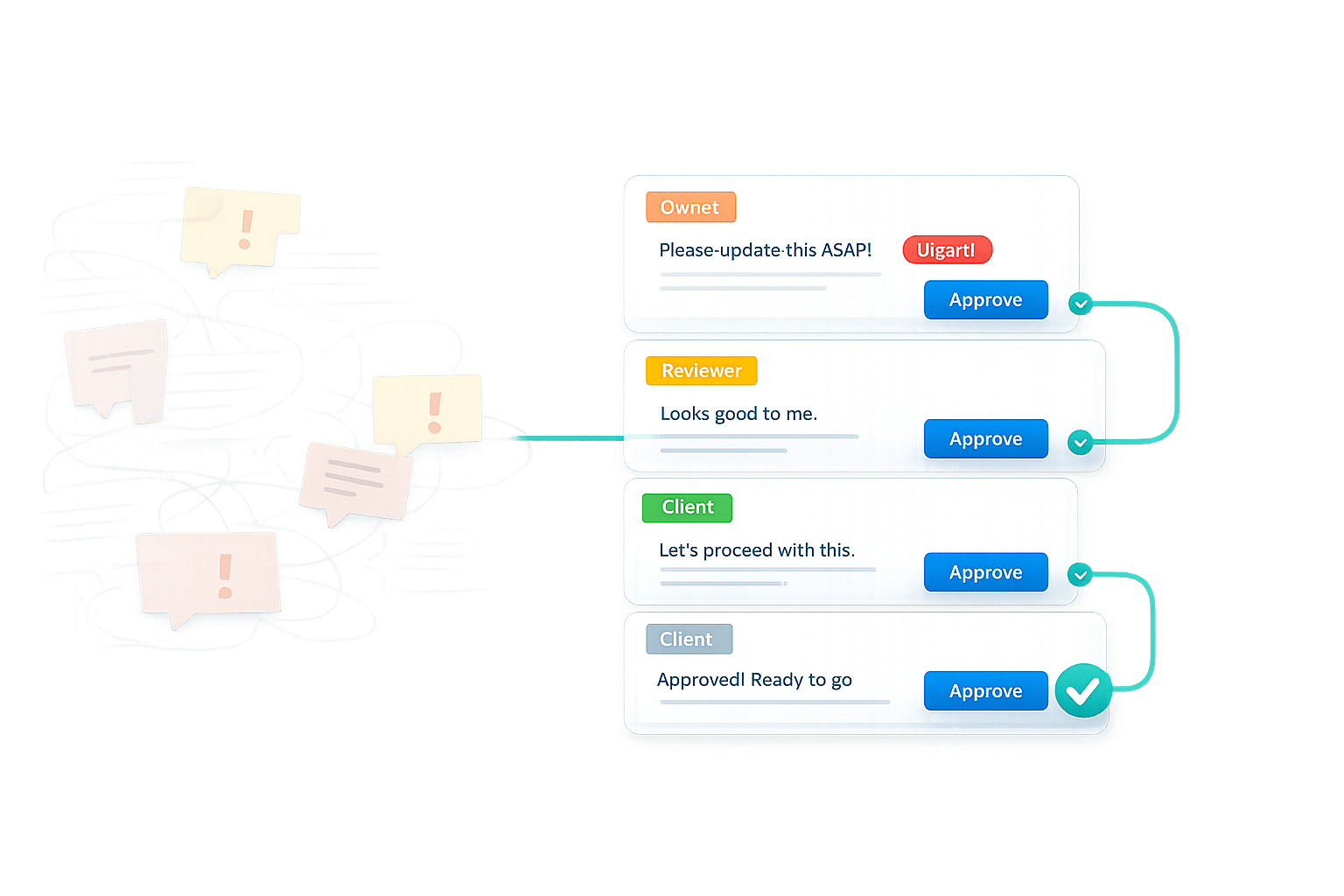
Why Client Approvals Stall and How to Fix It
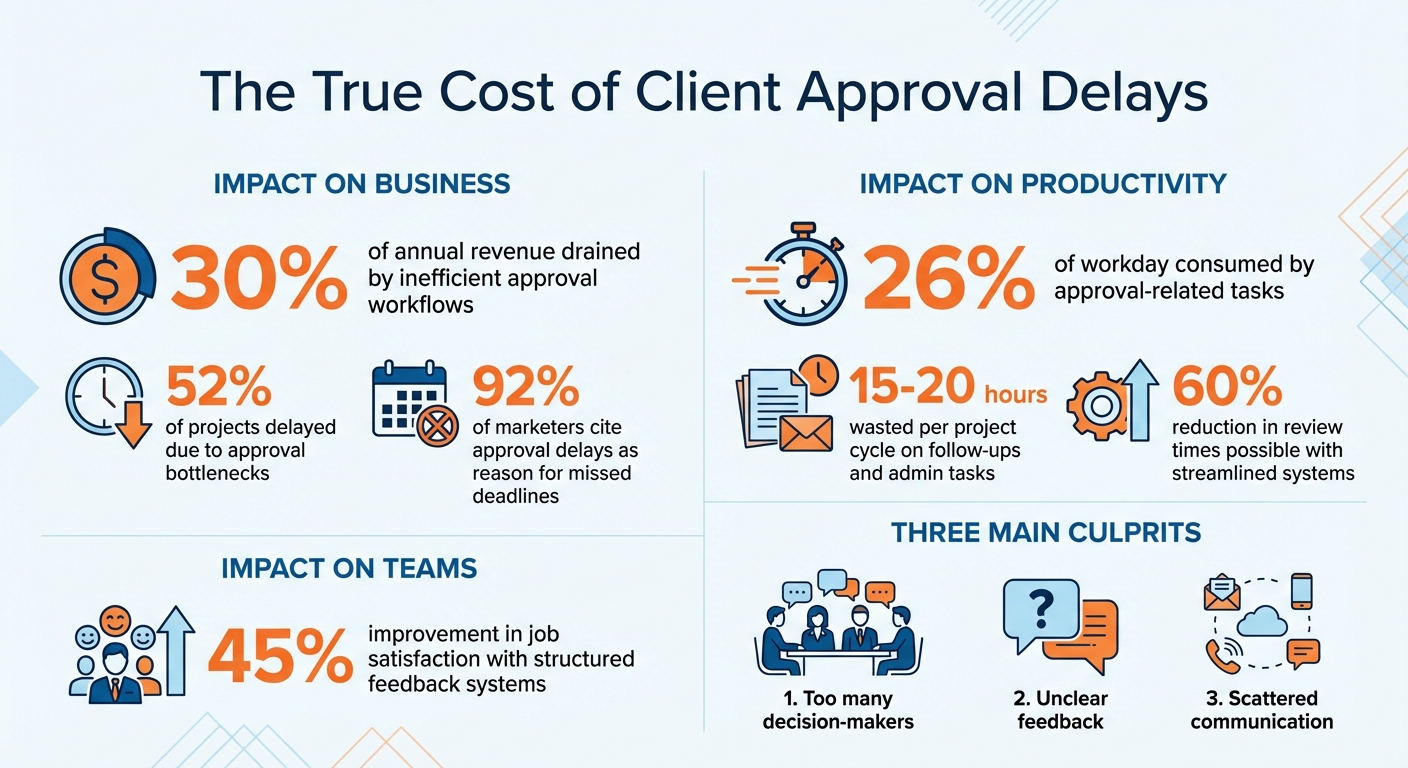
Approval delays can cost you time, money, and trust. They waste up to 26% of work hours, delay 52% of projects, and drain 30% of annual revenue. The main culprits? Too many decision-makers, unclear feedback, and scattered communication. Often, the root cause is a lack of clear, actionable design feedback.
Here’s how to fix it:
- Use tools like BoastImage for simple, direct feedback without requiring logins.
- Define clear roles, deadlines, and approval criteria upfront.
- Centralize feedback to avoid confusion and outdated versions.
These steps can reduce review times by 60% and save 15–20 hours per project, letting your team focus on delivering quality work instead of chasing feedback.
The True Cost of Client Approval Delays: Key Statistics
Fix Client Decision Delays at Your Creative Agency (Fast!)
sbb-itb-32f6eb2
What Approval Delays Actually Cost You
Approval delays are more than just minor inconveniences - they can have a major impact on your business. Inefficient approval workflows can drain up to 30% of annual revenue. Every delayed project chips away at your bottom line, turning what seems like a small holdup into a costly issue.
These delays also eat into employee productivity, consuming about 26% of their workday. Instead of focusing on creative tasks, team members are stuck chasing feedback and handling administrative follow-ups. The ripple effects are significant: marketing campaigns miss their launch dates, product releases lag behind schedule, and deliverables fail to align with market trends.
But the numbers only tell part of the story. When skilled professionals spend their time navigating endless revisions instead of tackling creative challenges, morale takes a hit. Burnout becomes a real risk, leading some of your best talent to look for opportunities elsewhere. Let’s dive into how these delays translate into wasted time, rushed work, and strained client relationships.
Wasted Time and Idle Teams
Approval delays can grind productivity to a halt. Teams lose 15 to 20 hours per project cycle just on follow-ups and administrative tasks. When feedback is scattered across emails, Slack messages, and phone calls, confusion reigns. Designers might end up working on outdated files or addressing conflicting comments because no one has a clear view of what’s needed. This inefficiency doesn't just waste time - it creates a domino effect, pushing deadlines further back and creating a backlog that's tough to manage.
Rushed Final Deliveries
When approvals drag on, teams are forced to cram their work into tighter timelines. This rush leads to mistakes - outdated logos might slip through, incorrect copy could go live, and overall quality takes a hit. The creative process suffers as well. Instead of exploring ideas and refining their work, teams are pressured to "just get it done." For marketing teams, this can mean missing critical moments, like a holiday season or trending opportunity, giving competitors the upper hand.
Damaged Client Trust
Perhaps the most intangible yet impactful cost is the erosion of client trust. Delays signal unreliability, making clients question whether your team can deliver on its promises. Even when the delays stem from slow client feedback, the perception of disorganization can be hard to shake. Scattered feedback across multiple channels only adds to the chaos, leading to misunderstandings and finger-pointing. What starts as a collaborative relationship can quickly sour into frustration and mistrust. Without clear processes and definitive sign-offs, clients lose faith in your ability to manage projects effectively.
Why Client Approvals Get Stuck
Figuring out why approvals stall is crucial to keeping projects on track. While each project has its quirks, most delays boil down to three core issues: too many people involved, unclear feedback, and mismatched expectations. These problems don’t just slow things down - they can throw teams off balance and frustrate clients.
Too Many Decision-Makers
Having too many people involved in the decision-making process often leads to chaos. When roles aren’t clearly defined, it’s hard to know who’s responsible for feedback and final approval. One person might request changes, only for someone else to contradict them. This back-and-forth creates a loop of conflicting feedback, leaving the project stuck in endless revisions.
Vague Feedback Instructions
Comments like "make it pop" or "I don’t like it" might express emotion, but they don’t offer actionable guidance. Without specifics - like annotations on a design or precise timestamps on a video - teams are left guessing. This guesswork wastes time and money, especially when feedback comes in long, unstructured emails instead of being tied to specific project elements. Misunderstandings are almost guaranteed in these situations.
Mismatched Expectations
When approval criteria aren’t clearly defined, perfectionism can take over and grind progress to a halt. Without a standardized process, reviews often turn into debates over personal taste instead of sticking to the project’s goals. Clients may stray from the original brief, leading to unexpected rework. Things get even worse when stakeholders review outdated versions of files due to the lack of a centralized, up-to-date source. This confusion results in wasted effort and growing frustration for everyone involved.
How to Speed Up Client Approvals
Tackling approval delays requires solutions that simplify feedback for clients while keeping everything organized for your team. By addressing issues like scattered feedback, unclear roles, and too many decision-makers, you can streamline the entire process.
Simplify Feedback with Client-Friendly Tools
One of the biggest hurdles to quick approvals is the tool clients are expected to use. If it involves creating accounts, remembering passwords, or navigating confusing dashboards, clients often revert to email or text messages. This scatters feedback and slows everything down. The solution? Tools that let clients provide feedback without logging in.
For example, BoastImage allows clients to leave visual feedback on web pages, images, and PDFs by simply clicking a link. They can comment directly on specific elements, making the process quick and intuitive. Meanwhile, your team benefits from version control, task management, and Kanban boards working in the background. The key takeaway: the bottleneck often lies in client adoption, not your team's processes. Remove barriers, and feedback becomes faster and clearer.
Set Approval Guidelines from the Start
Before any work begins, clearly define who is responsible for giving feedback and who has the final say. A staggering 92% of marketers cite approval delays as a reason for missed deadlines. This is often due to undefined roles and unclear expectations. During the project kickoff, outline how many revision rounds are included, set realistic deadlines for each review phase, and agree on what "approval" means - whether it's brand compliance, technical accuracy, or meeting the creative brief. When roles and expectations are clear, you avoid endless revisions that derail timelines.
Centralize Feedback for Clarity
Scattered feedback - whether through email, Slack, or voice notes - leads to confusion and slows progress. Centralized feedback tools solve this by creating a single source of truth for everyone involved.
With visual annotation tools, clients can pin comments directly to specific design elements or video timestamps, eliminating vague instructions like "fix the thing in the top corner." Automated version control ensures stakeholders always see the latest version of the work. Plus, structured systems boost team morale - studies show they can improve job satisfaction by 45%. Keeping all feedback in one place with clear context and version history means less time spent chasing updates and more time spent creating.
Conclusion
Client approvals often hit roadblocks for a few key reasons: too many decision-makers without clear responsibilities, ambiguous directives that leave your team guessing what phrases like "make it pop" even mean, and scattered feedback processes. These challenges can eat up as much as 26% of your team's productive workday and cause 52% of companies to miss deadlines regularly.
To address these issues, it's crucial to simplify and streamline your workflow. Start by assigning clear roles to each reviewer and setting firm deadlines for every stage of feedback. Most importantly, equip your clients with a feedback tool that eliminates hurdles - no accounts, no logins, no training required - so they can engage immediately and effectively.
BoastImage tackles this head-on by allowing clients to leave precise, visual comments with just a click. No need for accounts or logins - clients simply place feedback exactly where it’s needed. Meanwhile, your team benefits from version control, task management, and organized workflows, all running seamlessly in the background. By centralizing feedback, defining expectations from the start, and removing barriers to client participation, you can accelerate approvals significantly. Teams using streamlined approval systems save 15 to 20 hours per project cycle, freeing up time to focus on creative work instead of chasing down scattered input.
This approach keeps projects on track, builds client confidence, and protects the quality of your creative output, avoiding the delays and resource drains that can derail your team's momentum.
FAQs
How do I choose one final decision-maker?
To ensure smooth decision-making, it's crucial to establish clear authority and accountability from the start of the project. Assign roles carefully, making sure one person is designated as the final decision-maker. This avoids the confusion and delays that can come from conflicting feedback.
A structured approval process can make a big difference. Tools like standardized sign-off forms and tracking systems help clarify responsibilities and keep everything on track. When everyone knows who is in charge and how decisions are made, it reduces uncertainty, aligns expectations, and keeps the project moving forward efficiently.
What should an approval checklist include?
An approval checklist helps keep things organized and efficient. It should start with a clear project brief that outlines deliverables, timelines, and limits on revisions. Make sure to define roles and responsibilities so there’s no confusion or conflicting feedback during the process. Providing guidelines for actionable client input is also key - this ensures feedback is specific and useful.
Keep track of revisions by turning feedback into clear tasks and documenting any changes made along the way. When it’s time for the final sign-off, use standardized forms to secure final approval. Lastly, deliver the final files in an organized and systematic way to wrap things up smoothly.
How do I get clients to give clearer feedback?
To get better feedback, tackle common problems like unclear or disorganized responses. Start by giving clients clear, step-by-step instructions and consider using tools that allow them to leave direct, visual comments on designs or files. This approach reduces confusion and keeps all feedback in one place. Encourage actionable input by asking follow-up questions and linking their feedback to the project’s objectives. By streamlining and organizing the process, you’ll help clients provide more precise and useful feedback.