Stakeholder Feedback Integration: Best Practices
Managing feedback effectively can make or break your project. Poor feedback management leads to delays, wasted resources, and frustrated teams. This article dives into practical ways to streamline stakeholder feedback, ensuring faster approvals, fewer revisions, and better outcomes.
Key Takeaways:
- Centralize feedback: Use one platform to collect and organize input from stakeholders.
- Set clear goals and roles: Define objectives and assign responsibilities for feedback collection, decision-making, and implementation.
- Prioritize effectively: Use frameworks like RICE or MoSCoW to evaluate and act on feedback based on impact and feasibility.
- Close the loop: Share outcomes with stakeholders to build trust and maintain transparency.
- Continuously improve: Regularly refine your feedback process by identifying and addressing barriers to engagement.
Why it matters: Managing feedback well saves time, reduces confusion, and ensures projects align with user needs and goals. Start small - pick one strategy and apply it to your next project. Over time, these practices create a smoother, more efficient workflow.
How To Handle Stakeholder Feedback For Approval?
Common Problems in Stakeholder Feedback Integration
Stakeholder Feedback Management: Key Statistics and Impact Data
Teams often hit significant hurdles when trying to gather and organize stakeholder feedback. These challenges can disrupt workflows, stall progress, and even derail projects if left unchecked. Let’s dive into three common obstacles: managing excessive input, dealing with scattered feedback, and struggling to prioritize conflicting opinions.
Too Much Feedback to Manage
When a project involves input from dozens of stakeholders, the sheer volume of feedback can feel unmanageable. Different groups often have competing priorities, and as the number of stakeholders grows, so does the likelihood of conflicting directions.
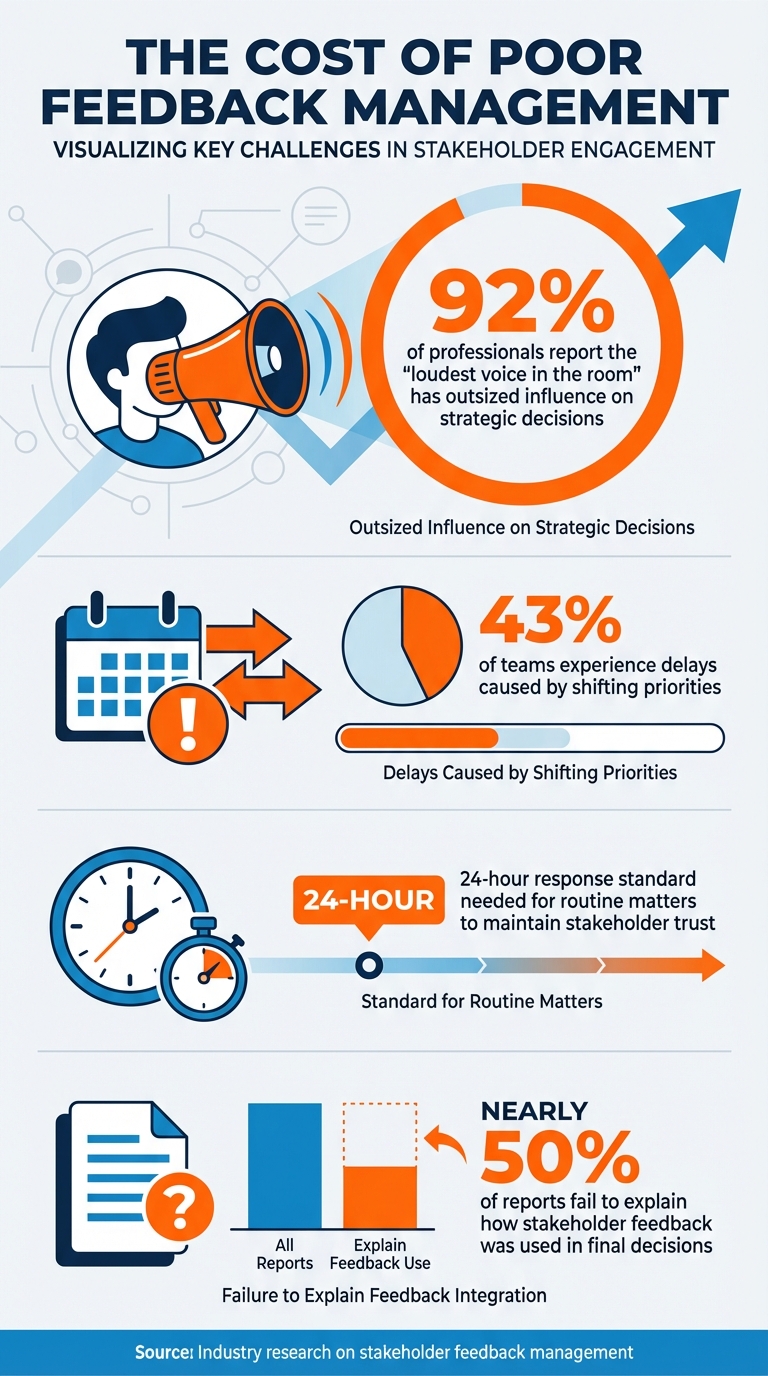
Adding to the complexity, dominant voices frequently overshadow more informed perspectives. A striking 92% of professionals report that the "loudest voice in the room" tends to have an outsized influence on strategic decisions. This imbalance not only delays decision-making but also leads to rework cycles caused by contradictory input. A unified platform for organizing and integrating feedback can help mitigate these issues by streamlining communication and ensuring all voices are heard.
Scattered Feedback Across Multiple Channels
Feedback often comes in from a variety of sources - emails, messaging apps, phone calls, and meeting notes - making it difficult to track and act on critical insights. This fragmented approach wastes time, muddles timelines, and can delay resolutions by days, which erodes stakeholder trust. When stakeholders feel out of the loop, they may resort to micromanagement. Research suggests that establishing a 24-hour response standard for routine matters is essential to maintaining trust and momentum. Without centralized feedback collection, even minor questions can take days to address, slowing progress and frustrating everyone involved.
Difficulty Prioritizing Feedback
Deciding which feedback to act on can be tricky, especially when priorities clash. For example, what marketing deems urgent might not align with engineering’s focus. Without clear guidelines for decision-making, teams often default to addressing the loudest voices rather than aligning feedback with the project’s overall goals.
This tendency to prioritize leadership intuition over user-focused input creates further complications. In fact, 43% of teams report delays caused by shifting priorities. As a result, resources may be wasted on features that sound appealing in meetings but fail to address real user needs. To avoid this, teams need robust prioritization frameworks that help balance competing demands and keep the project on track.
Best Practices for Stakeholder Feedback Integration
Once you’ve identified the challenges tied to stakeholder feedback - like scattered input, overwhelming volume, or conflicting priorities - the next step is finding practical ways to address them. The following strategies focus on bringing structure to the feedback process, aligning it with your goals, and making prioritization more manageable.
Use a Single Platform for All Feedback
Keeping all feedback in one place is key to staying organized. When input comes through emails, Slack, phone calls, and meeting notes, it’s easy for important ideas to get lost in the shuffle. This can result in missed deadlines and drawn-out project timelines. Using a platform that captures feedback from multiple channels - like email, SMS, or web forms - and consolidates it into a single repository can make a huge difference. Assigning a team member to oversee this process ensures conflicting ideas are addressed before they slow things down.
Non-technical stakeholders often avoid giving feedback because traditional tools feel too complicated. BoastImage makes it simple by allowing clients to comment directly on web pages, images, or PDFs without needing to create accounts or log in. Behind the scenes, your team gets tools like task tracking, version control, and Kanban boards to keep everything organized. This eliminates scattered feedback and avoids extra costs for external collaborators.
Before diving into consolidation, it’s helpful to define roles and responsibilities. Frameworks like RACI or DARCI can map out who provides input, who makes decisions, and who implements changes. When reaching out for feedback, be clear about the project phase and the type of input needed - whether it’s general ideas or detailed edits. This reduces irrelevant suggestions and keeps things focused.
Set Clear Goals and Assign Roles
Having clear objectives before gathering feedback ensures the input you receive is actionable. Research shows that nearly half of reports fail to explain how stakeholder feedback was used in final decisions, which often leads to wasted effort. Setting clear goals upfront helps avoid this pitfall.
Start by identifying your key stakeholders - the people whose roles and influence are critical to the project’s success. Then, assign specific roles within your team to manage the feedback process:
| Role | Responsibility |
|---|---|
| Feedback Owner | Oversees feedback collection, ensures tools are accessible, and maintains the feedback repository. |
| Decision Maker | Evaluates feedback to align it with strategic goals and resolves conflicting viewpoints. |
| Implementer | Applies approved feedback and integrates changes into the workflow. |
This structure works hand-in-hand with a centralized feedback platform, ensuring a smooth process from collection to execution.
It’s also important to set expectations early. Let stakeholders know why their feedback is needed, how long they’ll be involved, and what benefits they’ll gain from participating. Encourage them to submit written feedback through your platform before scheduling meetings. This creates a searchable record and accommodates different communication styles.
Apply Prioritization Frameworks
Conflicting priorities - like marketing’s urgent requests versus engineering’s focus - can derail progress without a clear process for evaluating feedback. Using prioritization frameworks helps teams make objective decisions.
The RICE scoring model is a popular choice, evaluating feedback based on Reach (how many users it affects), Impact (its contribution to goals), Confidence (certainty of the data), and Effort (resources required). For example, Intercom suggests scoring impact on a scale of 0.25 to 3, with 3 indicating a "massive" impact and 0.25 representing a "minimal" one. Confidence scores above 80% are considered reliable, while those below 50% are treated as guesses.
Another approach is the MoSCoW Method, which categorizes feedback into "Must have", "Should have", "Could have", and "Won’t have." This helps define project scope and prioritize essential requirements. For fast-paced environments, the ICE Framework (Impact, Confidence, Ease) offers a simpler way to prioritize feedback when speed matters more than precision.
"The goal isn't mathematical precision. It's clarity." – Sneha Kanojia, Plane Blog
To avoid bias, use a scoring guide with clear metrics, such as monthly recurring revenue or growth percentages, to ensure consistency. Once feedback is scored, focus on "low-hanging fruit" - ideas that are easy to implement and align with your goals. Quick wins not only build momentum but also show stakeholders that their input is valued. With feedback prioritized, your team is ready to move forward efficiently.
sbb-itb-32f6eb2
How to Close the Feedback Loop
Gathering feedback is just the beginning. The real impact comes from acting on it and showing stakeholders the results. Without follow-through, even the most valuable feedback risks being ignored or forgotten. Stakeholders want to know how their input shaped decisions - or why certain suggestions couldn’t be adopted.
As Mural puts it:
"Actively soliciting and listening to stakeholder opinions and advice shows that you care what they think. This will help foster a sense of trust, transparency, and collaboration." – Mural
When you demonstrate transparency and show stakeholders how their feedback influenced outcomes, you build trust and encourage ongoing engagement. Clear communication about how their input was used - or why it wasn’t - keeps everyone aligned and invested in the process.
Share Feedback Outcomes with Stakeholders
Once you've implemented changes, it's important to close the loop by informing stakeholders about what happened. For instance, in the California Strategic Growth Council's Affordable Housing and Sustainable Communities (AHSC) Round 7 program, staff created a "Summary of Changes" document. This detailed how public comments shaped program guidelines, ensuring stakeholders saw the direct impact of their participation.
A simple email or progress report can work wonders. Summarize what feedback was acted upon, explain why certain suggestions weren’t implemented (e.g., due to budget limits or technical constraints), and provide transparency around the decision-making process. Even when the outcome isn’t what stakeholders hoped for, clear communication maintains credibility.
Tools like BoastImage make it easier to track feedback during revisions, providing real-time updates to stakeholders without the need for constant back-and-forth communication.
Documenting outcomes clearly also lays the groundwork for a well-organized feedback system.
Create a Feedback Repository
Centralizing feedback into a single repository ensures nothing gets lost and helps with long-term planning. Over time, this database becomes a goldmine for identifying trends and recurring issues. Organize feedback by categories - such as usability, performance, or feature requests - and tag it by stakeholder, project phase, or priority. This makes it easy to reference past input when making future decisions.
Consider giving stakeholders view-only access to this repository. This transparency reduces the need for frequent updates while reinforcing that their feedback is being tracked and valued.
Improve Your Feedback Process Over Time
No feedback process is flawless from the start, but it can always be refined. Regularly review your approach - whether at the end of a project cycle or quarterly - to identify areas for improvement. Look for patterns in participation. Are there barriers preventing stakeholders from engaging, like poor timing or overly complicated response methods?
Ask questions like:
- Are we engaging the right stakeholders?
- Is the timing of our feedback requests effective?
- Are we making it easy enough for people to respond?
Document these findings in a "lessons learned" report to guide future projects. As the Strategic Growth Council advises:
"The key to creating an effective feedback loop is to genuinely listen to feedback and do what you can to implement program improvements and address common challenges." – Strategic Growth Council
Even small tweaks, like shortening surveys to take just one minute, can make a big difference. If email responses are low, try asking for feedback immediately after meetings instead. The goal is to make the process as seamless as possible while continuously improving it. Over time, these adjustments ensure your feedback loop remains efficient and effective.
Conclusion
Keep your feedback organized. Using a single platform ensures no comments get lost in emails, Slack threads, or scattered meeting notes. By consolidating input in one place, you can capture every stakeholder's perspective without the chaos of juggling multiple channels.
Prioritizing feedback is just as important. Tools like feedback grids help you sort through what's working, what needs improvement, and where opportunities lie. This ensures your team focuses on high-impact changes first. As Gary Dhother, Senior Marketing & GTM Program Manager at Teamwork.com, explains:
"Stakeholder management represents a balancing act between getting things done in a timely manner and maintaining positive relationships among collaborators".
Closing the loop on feedback builds trust. When you share how input shaped your decisions - or explain why certain suggestions weren’t implemented - you show transparency and respect for your stakeholders’ time. This approach turns feedback into an ongoing, collaborative process, rather than a one-off task.
Visual annotation tools also make feedback more precise. They allow stakeholders to leave comments directly on design elements, reducing vague critiques. Tools like BoastImage make this process seamless, letting clients provide feedback with just a link - no accounts, logins, or training required. For teams struggling with client adoption of feedback tools, BoastImage’s client-friendly approach simplifies collaboration while offering robust management features for your team.
Start small. Choose one practice from this article and try it in your next project. Over time, refine your approach. Even small changes - like keeping feedback surveys under a minute or scheduling regular review checkpoints - can make a big difference in collaboration and project outcomes. A centralized and prioritized feedback system can turn stakeholder insights into actionable results.
FAQs
How can I manage and streamline excessive stakeholder feedback effectively?
Handling a flood of stakeholder feedback starts with establishing structure and setting priorities. Kick things off by defining a clear feedback process. Specify how and when stakeholders should share their input. This not only keeps contributions focused but also ensures feedback aligns with the project's overall goals.
To prevent feeling overwhelmed, focus on feedback that matters most. Consider its impact and feasibility - prioritize suggestions that bring the most value or fit within strategic objectives. It’s also helpful to set clear boundaries with stakeholders about the type and scope of feedback you’re looking for. This can help cut down on irrelevant or off-topic comments.
Leverage tools like BoastImage to make the feedback process smoother. With this tool, stakeholders can leave comments directly on web pages, images, or PDFs - no logins or accounts needed. This approach keeps things efficient while ensuring the input you receive is practical and easy to act on.
What are the best tools to gather and organize stakeholder feedback in one place?
The best tools for stakeholder feedback are those that make the process straightforward and keep all input in one easy-to-access place. Ideally, these platforms should be user-friendly, letting stakeholders share their thoughts without needing to create accounts or go through a complex setup.
Take client-first feedback tools like Boast, for instance. They allow stakeholders to leave comments directly on web pages, images, or PDFs - no logins required. This approach cuts down on miscommunication, speeds up the feedback loop, and ensures teams can respond to input quickly. Pairing these tools with strong internal workflows helps create an efficient system for handling feedback from various sources.
How can I handle conflicting feedback from different stakeholders effectively?
Managing conflicting feedback from stakeholders calls for a careful and organized strategy. The first step is to pinpoint the stakeholders who are most relevant and influential. This could be determined by their role, expertise, or the impact they have on the project. By doing this, you can focus on the feedback that best aligns with the project’s goals and the needs of its users.
Once you’ve gathered the feedback, evaluate it against the project’s key objectives and strategic priorities. Consider factors like feasibility, importance, and how well it fits with the overall vision. Open communication plays a big role here - share your reasoning with stakeholders, explain how decisions were made, and document everything. This keeps the process transparent and helps build trust.
If conflicts emerge, the goal should be to balance differing perspectives while keeping the project’s success as the top priority. Clear communication and a transparent process for setting priorities can go a long way in fostering understanding and ensuring that collaboration stays on track.