
How to Set Feedback Deadlines Clients Respect
Missed feedback deadlines can derail projects, frustrate teams, and hurt client relationships. The key to avoiding these issues lies in clear communication, realistic timelines, and simplified processes. Here’s how you can ensure clients respect deadlines:
- Set Clear Expectations: Clearly outline feedback deadlines, number of revision rounds, and project phases upfront. Use specific language like “Feedback due by EOD Friday, March 6, 2026.”
- Match Deadlines to Complexity: Adjust timelines based on the task. Simple reviews may need 2–3 days, while complex ones might require a week.
- Simplify Feedback Processes: Use tools like Boast to make providing feedback easy and fast - no logins or extra steps.
- Break Projects into Milestones: Divide work into smaller phases with specific deadlines to keep progress steady and manageable.
- Build Buffers: Add extra time to absorb delays without disrupting the overall schedule.
- Communicate Effectively: Confirm deadlines verbally and in writing. Regular check-ins and reminders help keep clients accountable.
- Acknowledge Delays Gracefully: If deadlines are missed, explain the impact on the timeline without creating tension.
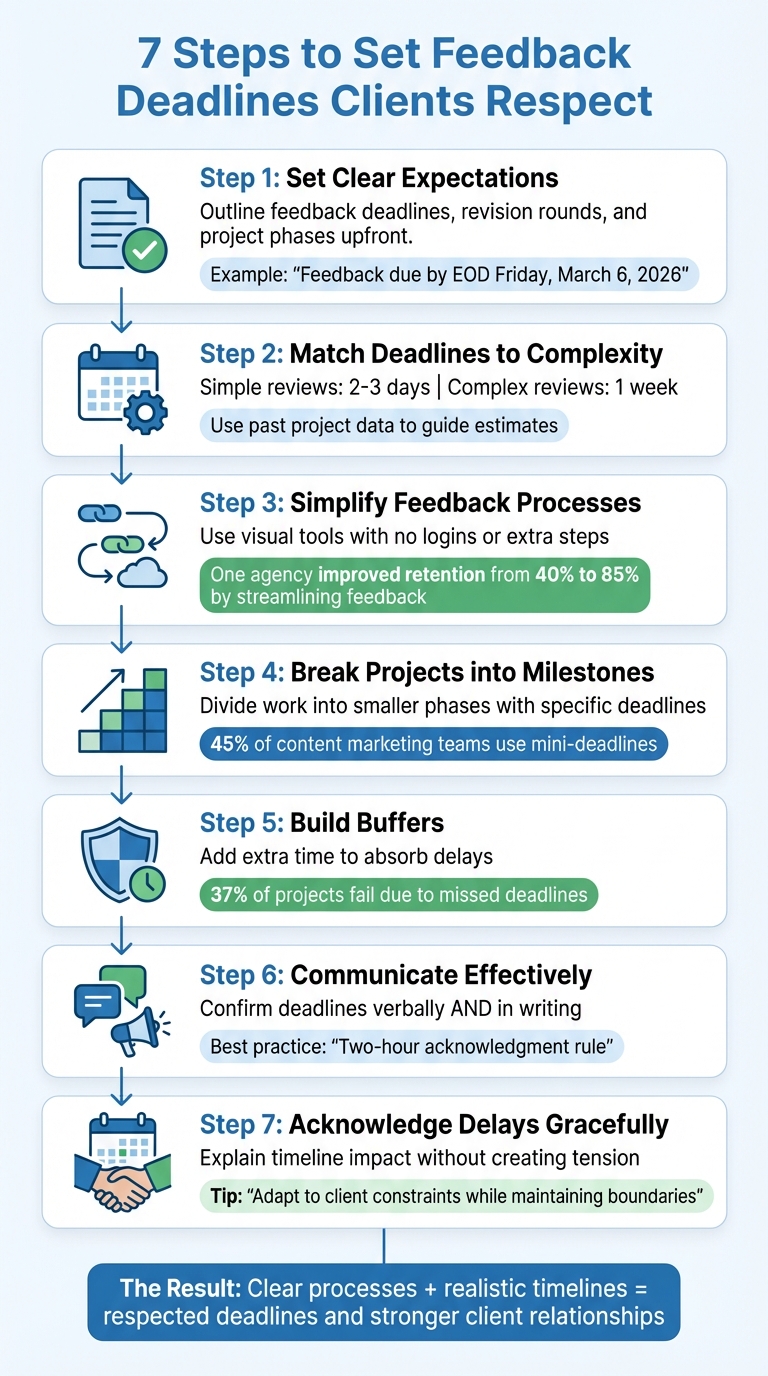
7 Steps to Set Client Feedback Deadlines That Get Respected
How to Manage Client Expectations and Set Boundaries | The Journey
Why Clients Miss Deadlines
Missed deadlines are often less about clients being indifferent and more about challenges in the feedback process.
Unclear Instructions and Expectations
When guidance is vague, clients can feel unsure, leading to delays or incomplete feedback. For instance, many clients don’t fully understand what a "round of revisions" entails.
"Those clients who send you back the 'ridiculous revision requests' aren't wrong - usually they're just operating with no context." - Jennifer Bourn, Founder of Bourn Creative
Without a clear framework for objective feedback, clients often fall back on personal preferences, offering vague suggestions like “make it pop” or “make it cooler.” Adding to the confusion, design-specific terms such as "kerning", "hierarchy", or "responsive breakpoints" can feel overwhelming and alienate clients. This lack of clarity often leads to disengagement. The problem worsens when feedback comes from multiple stakeholders, often through disjointed email chains, creating even more confusion and slowing down the project.
But communication isn’t the only hurdle - clients’ schedules and internal processes also play a big role.
Clients' Busy Schedules
Clients are often juggling a lot, and your project might not always be their top priority.
This can lead to delays, especially when clients experience "decision anxiety", a term used to describe the uncertainty that arises when they feel unprepared to make key decisions. Without clear guidance at each step, clients may second-guess their input, adding to procrastination. Combined with unclear expectations and packed schedules, feedback delays become almost inevitable.
These challenges are often made worse by overly complex feedback systems.
Complicated Feedback Processes
Over-complicated systems discourage timely feedback. If clients are required to download software, create accounts, or mark up PDFs manually, you’re putting unnecessary barriers in their way. One agency significantly improved its client retention rate - from 40% to 85% over 18 months - by streamlining its feedback process and adopting a same-day acknowledgment policy.
When clients struggle to keep track of progress, they’re more likely to deprioritize providing feedback. While the average expectation for an email response is now under four hours, many creative teams still rely on outdated, inefficient processes. Tools like Boast eliminate these hurdles by allowing clients to comment directly on the work through a simple link - no logins, no extra steps. The easier the process, the faster clients will respond.
How to Set Realistic Deadlines
Creating realistic deadlines starts with understanding the scope of the project. For instance, designing a mobile-responsive landing page with multiple sections takes more time than tweaking a logo. Yet, many creative teams handle all feedback requests as if they require the same effort. The trick is to align your timeline with the complexity of what you’re asking clients to review.
Match Timeframes to Project Complexity
Plan for 3–5 business days for initial client feedback. Simpler tasks, like approving colors, might need quicker responses, while more intricate deliverables, such as multi-page designs, could demand up to a week. Use data from past projects to guide your estimates. For example, if previous homepage mockups typically took four days, setting a two-day deadline is unrealistic.
Also, factor in dependencies. If the project involves legal reviews or external input, include those in your timeline. As tech lawyer Akhil Mishra advises:
"Client feedback must be provided within 3 business days to keep the timeline on track"
- this assumes the client has all the necessary information to make decisions.
Once you’ve aligned deadlines with the project’s complexity, the next step is to protect your timeline by adding strategic buffers.
Build Buffers Into Your Timeline
Always extend client deadlines beyond the time your team needs for revisions. For instance, if your team requires three days for updates, set the client deadline at one week. This extra time helps absorb unforeseen issues like technical glitches, illness, or unexpected delays in meetings. It’s worth noting that 37% of projects fail due to missed deadlines.
Think of buffers as a safety net. They absorb minor delays without throwing off the entire schedule. However, avoid adding so much extra time that it encourages procrastination.
With buffers in place, you can shift focus to managing milestones effectively.
Break Projects Into Smaller Milestones
Tackle large projects by dividing them into smaller phases, each with its own deadline. For example, instead of a single, overwhelming deadline, set mini-deadlines for individual components like the homepage, interior pages, and quality assurance. This method keeps the project moving steadily and reduces the last-minute rush often associated with large, singular deadlines.
This approach isn’t just theoretical - 45% of content marketing teams use mini-deadlines to maintain control over their workflows. Breaking projects into milestones also makes it easier to identify bottlenecks early. If a client misses an initial deadline, you can adjust the timeline for later phases without jeopardizing the final launch.
When clients see steady progress in smaller, manageable steps, they’re more likely to stay engaged and prioritize their feedback. This structured approach keeps everyone on track, ensuring deadlines are met without unnecessary stress.
sbb-itb-32f6eb2
How to Communicate Deadlines Clearly
Once you’ve set realistic deadlines, the next step is making sure they’re communicated in a way that leaves no room for confusion. Clear communication ensures everyone is on the same page, prevents misunderstandings, and keeps your project moving forward.
Confirm Deadlines Verbally and in Writing
Start by discussing deadlines during your kickoff meeting. Walk your client through the timeline, explain why each milestone is important, and invite them to share any concerns or adjustments before finalizing the plan. Afterward, send a written confirmation so there’s a clear reference point for everyone involved.
A helpful practice is the two-hour acknowledgment rule: respond to client messages within two hours, even if it’s just to say, “Got it, reviewing now.” This small step improves responsiveness and builds accountability. It’s also a good idea to formalize your feedback process in the contract. Specify how many revision rounds are included (usually three), what happens if deadlines are missed, and how the project will proceed if feedback isn’t provided on time. Referencing this agreement during updates - like saying, “We’ll move to wireframes as outlined in our contract” - reinforces expectations and ensures transparency.
Provide Clear and Specific Instructions
Avoid vague requests like “Let me know what you think.” Instead, be specific and actionable. For example: “Please share your feedback by EOD Friday, March 6, 2026.” This eliminates guesswork and gives your client a clear target.
Use straightforward language and ask focused questions. Instead of asking, “What do you think?”, try something like, “How do you think this homepage video will resonate with your audience?” This approach narrows their focus and makes the review process less overwhelming.
At the start of the project, consider sharing a one-page guide titled “How This Works.” This document can outline the review process, highlight the type of feedback needed at each stage, and clarify the number of revision rounds included. Encourage clients to consolidate feedback from all stakeholders into a single message to avoid fragmented communication. One agency increased its client retention rate from 40% to 85% in 18 months simply by improving its feedback process with clearer instructions and faster acknowledgment responses. Aligning clear instructions with set deadlines keeps projects on track and reduces unnecessary back-and-forth.
Use Visual Feedback Tools for Transparency
Managing feedback through email chains or text messages can quickly become chaotic. Visual feedback tools simplify the process by centralizing communication and making it easier to track progress.
For example, tools like Boast let clients click a link and comment directly on designs without needing to create an account or download software. Features like point-and-click commenting allow clients to highlight specific issues in just a few steps.
Additionally, visual dashboards provide real-time updates, showing clients exactly which tasks are awaiting their input. This level of transparency reduces uncertainty, builds trust, and keeps feedback loops efficient - all while ensuring nothing gets lost in the shuffle.
Build Trust Through Consistency and Flexibility
Earning respect for feedback deadlines starts with trust, which is built through clear, steady communication. Trust grows when you consistently communicate, understand your client's limitations, and show a willingness to adjust when necessary. This trust not only strengthens your client relationships but also helps ensure deadlines are met more reliably.
Check In Consistently Without Overstepping
Regular check-ins - weekly or twice a week - are a simple yet effective way to review progress, discuss next steps, and address any pending feedback.
As deadlines approach, a friendly reminder can help keep things on track. For example, you might say: "We're looking forward to your feedback by Friday, March 6, 2026, so we can move to the next phase as planned." This keeps the timeline front and center without sounding pushy or accusatory.
Automating reminders can also be a game-changer. These ensure deadlines are clear and nothing gets overlooked, while removing the personal element of "nagging". This way, you keep the process professional and efficient.
Consistent follow-ups also prepare you to handle unexpected client challenges with ease.
Acknowledge and Adapt to Client Constraints
Deadlines aren’t always met, and that’s okay - clients often face unforeseen hurdles like last-minute meetings, budget changes, or delays in internal approvals. When this happens, acknowledge the situation and clearly explain how it affects the timeline. For example, if feedback due on March 6 arrives on March 10, let the client know the final delivery date will shift to March 24. This approach holds them accountable without creating tension.
If a client requests something outside the original scope that could extend the timeline, it’s important to set boundaries gracefully. Instead of outright declining, suggest adding it to a "nice-to-have" list for a future phase. This keeps the current project on track while still valuing their input.
Once adjustments are made, reinforcing timely actions helps solidify trust even further.
Reinforce Positive Behavior
When clients meet deadlines or provide clear feedback, make sure to acknowledge it. A quick note like, "Thanks for your prompt response - it keeps us on track for launch", can go a long way. Referencing the contract during positive moments also helps normalize it as a shared guide rather than a tool for conflict. For instance, saying, "We're moving to wireframes as outlined in our agreement!" frames the contract as a roadmap for collaboration.
One example of this in action comes from a mid-size creative agency that revamped its feedback process. They implemented same-day acknowledgment policies, phase-specific feedback guides, and real-time project dashboards. The results? Client retention jumped from 40% to 85% in just 18 months. This shows how consistency and openness can build the trust needed for clients to respect deadlines and follow through on their commitments.
Conclusion
Getting clients to stick to feedback deadlines is all about clarity, not being overly rigid. By removing common delays, setting achievable timelines, and communicating expectations in straightforward terms, you can avoid many of the issues that slow projects down. As Jennifer Bourn, Founder of Bourn Creative, explains:
"All problems that arise from design revisions can be attributed to a failure to properly set expectations, poor communications, or mismanagement of the client or project".
A key part of improving this process lies in the tools you use. Visual feedback tools, like Boast, simplify the process by allowing clients to click a link and comment directly on your work - no extra steps required. When feedback is this easy, clients are much more likely to provide it on time.
Beyond tools, timely follow-ups and flexible strategies strengthen your relationship with clients. Practices like the two-hour acknowledgment rule, regular check-ins, and adapting to client needs show that you value the partnership. As Visualloop puts it:
"The work wins clients. The experience keeps them".
It’s worth noting that retaining clients is far more cost-effective than acquiring new ones - research shows it costs five to seven times more to bring in a new client than to keep an existing one.
The benefits of a well-structured feedback process are clear. One mid-size creative agency saw its retention rate jump from 40% to 85% in just 18 months by focusing on speed, clarity, and transparency. These results highlight that clients want confidence in the process, not confusion or delays.
FAQs
What should I do if a client misses a feedback deadline?
If a client misses a feedback deadline, it’s important to follow up quickly. Politely remind them of the agreed timelines and explain how delays might impact the project’s progress. Clear communication is key - set expectations early on, such as the number of revisions included and how additional revisions will be charged. Using tools to centralize feedback can also help avoid scattered instructions and keep everything organized. By staying professional, you can address the situation without straining the relationship.
How do I set deadlines when multiple stakeholders must approve?
When working with multiple stakeholders, it's crucial to establish a clear feedback deadline right from the start. Make sure everyone is on the same page and understands why sticking to this deadline is important for keeping the project on schedule. To avoid last-minute surprises, consider setting up intermediate check-ins where feedback can be gathered in a more structured way. Getting stakeholders involved early and maintaining open communication throughout the process can help smooth out the approval workflow and ensure deadlines are met.
How can I get clearer, more specific client feedback faster?
To ensure quicker and more effective feedback from clients, start by setting clear expectations from the beginning. Define the project scope, objectives, and the number of revisions allowed right at the outset. Encourage clients to provide feedback that is specific and actionable, rather than relying on vague or unclear remarks.
Using a centralized feedback tool can make communication more efficient by keeping all input in one place, reducing confusion from scattered comments. Additionally, establish firm deadlines for review cycles to prevent delays and keep the feedback process focused and productive.