How to Turn Your B2B Website into a Growth Engine
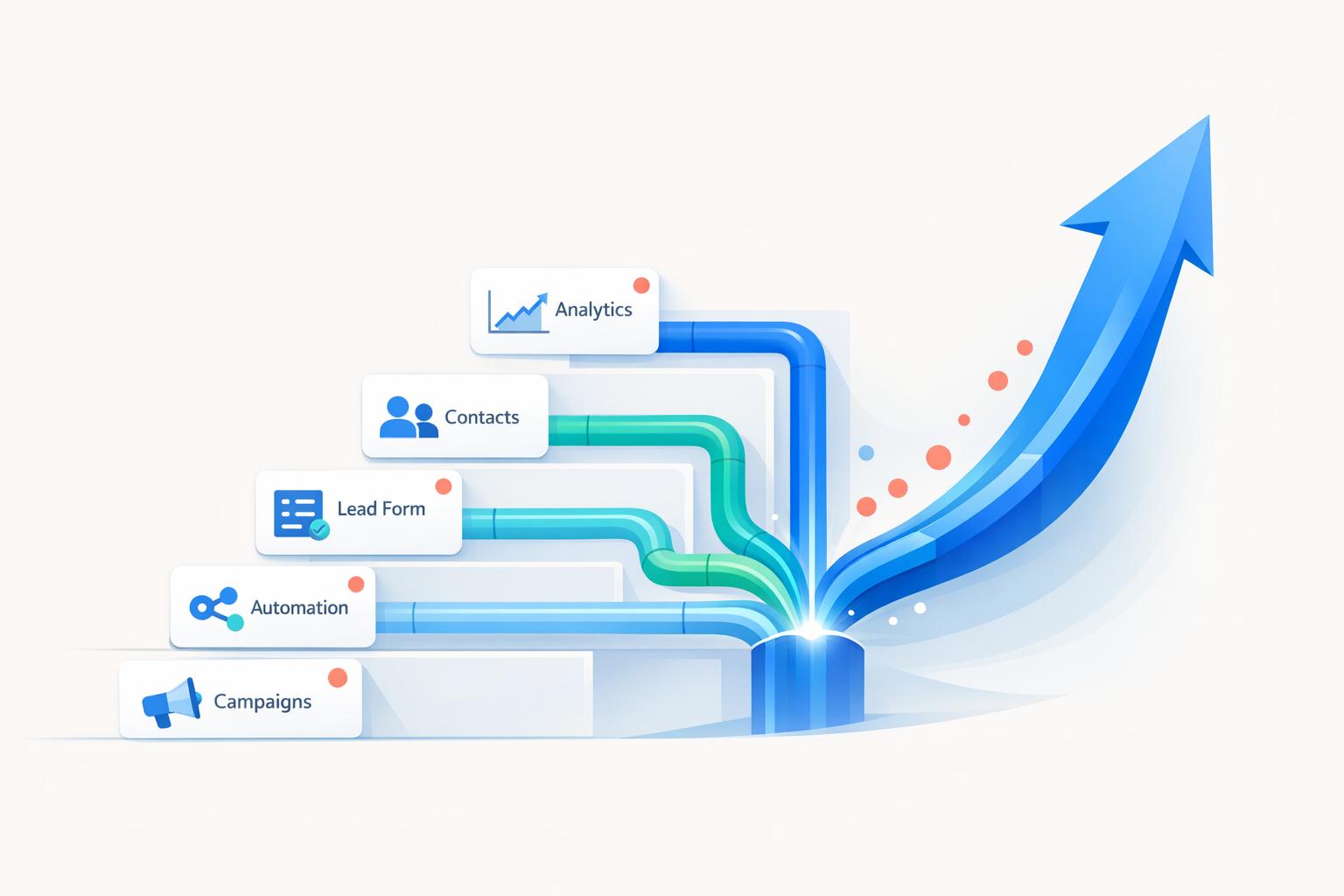
In today’s fast-paced digital landscape, a B2B website can no longer just "exist" - it needs to act as a dynamic growth engine, driving measurable business outcomes. To achieve this, your website must work seamlessly with your marketing and sales systems, aligning with clear goals and leveraging the latest technology. But how do you get there? In this article, we distill insights from industry experts to show you how to transform your website into a strategic powerhouse that delivers results.
Why Your Website Might Be Holding You Back
A website is often one of the first touchpoints for potential clients. Yet, many organizations treat it as a static asset rather than a tool that drives lead generation, engagement, and conversions. The problem isn’t always the website itself - it’s how it is set up to align (or misalign) with the organization’s goals. Most teams don’t fully understand the potential of their websites, failing to utilize tools, analytics, and strategies that could dramatically improve results.
Web technology has evolved significantly in the last few years, enabling websites to integrate with sales and marketing ecosystems while leveraging tools like SEO, Answer Engine Optimization (AEO), and advanced analytics. However, many organizations still struggle to fully realize their site’s potential due to unclear objectives, siloed departments, outdated tools, and a lack of actionable data.
The Role of Goals in Website Success
One of the biggest challenges is that many B2B companies lack clearly defined goals for their website. For example, is the top priority lead generation, customer engagement, or internal efficiency? Without a clear purpose, websites often fail to meet expectations. According to experts, a successful website begins not with technology but with a strategic alignment of goals between marketing and sales teams.
sbb-itb-32f6eb2
What Does a Growth-Oriented Website Look Like?
Websites built to drive growth are more than just visually appealing - they function as critical components of a larger sales and marketing ecosystem. Here are the key attributes of a successful growth-oriented website:
- Clear Goals: Whether it’s lead generation, brand awareness, or user engagement, your website needs a clear purpose that aligns with your business objectives.
- Integration with Sales and Marketing Stacks: A thriving website connects seamlessly with tools like CRMs, analytics platforms, and marketing automation software.
- Content Strategy that Works: Strong content, optimized for both SEO and AEO, is critical for driving organic traffic and meeting customer needs.
- User-Friendly Tools: Choose tools that simplify workflows for internal teams while being intuitive enough for clients or external stakeholders to use without additional training.
- Data-Driven Decision Making: Tracking key metrics through analytics ensures that your website constantly evolves to better serve your business.
Let’s break down the actionable steps and tech stack recommendations to make this a reality.
The Technology Stack You Need for a Growth-Engine Website
Your website’s tech stack is the foundation of its ability to function as a growth engine. If you’re building or improving your site, consider these critical tools and technologies:
1. Content Management System (CMS)
Your CMS should not only support your content strategy but also enhance efficiency for your internal teams. Choose a scalable, user-friendly CMS that reduces administrative work while allowing your site to grow with your business.
2. SEO and AEO Tools for Visibility
Surfer SEO is an excellent example of a powerful tool to plan and optimize content. It helps you create keyword-rich articles, identify underperforming pages, and align content with search engine algorithms. Additionally, leverage Answer Engine Optimization (AEO), which focuses on structuring content (e.g., FAQs) to perform well in AI-driven search engines and voice search results.
3. Structured Data with JSON-LD
Integrating JSON-LD (a schema markup format) on your website ensures that search engines can parse your content effectively. This structured data is essential for improving your website’s SEO and AEO performance, making it easier for search engines to understand and surface your content.
4. Analytics Tools for Tracking and Insights
Data tracking is non-negotiable. Use tools like Google Looker Studio (formerly Data Studio) to aggregate and analyze key metrics. Focus on tracking 3–5 relevant KPIs to avoid overwhelming your teams while maintaining actionable insights.
5. Visitor Identification Tools
For B2B companies, knowing who is visiting your website can be a game-changer. Tools that provide anonymized traffic data (while remaining compliant with privacy laws) allow you to identify potential leads and improve sales outreach.
6. Integrated Marketing Channels
Ensure that your marketing channels - social media, email, and content platforms - are driving traffic back to your website. Use UTM parameters in links to measure the success of specific campaigns and refine your strategy over time.
Five Steps to Redesign Your Website for Growth
If you’re considering a website redesign, here’s a roadmap to ensure your updates drive measurable results:
1. Define the Primary Goal of Your Website
Is your site meant to generate leads, establish thought leadership, or enhance operational efficiency? Choose one or two key objectives and let them guide your decisions around design, content, and technology.
2. Map the Flow of Leads and Data
Understand how leads and signals move through your organization. Where does website traffic come from? How are leads tracked, nurtured, and converted? Mapping this process ensures alignment between marketing and sales teams.
3. Develop a Robust SEO and Content Strategy
Content is the foundation of your website’s success. Invest in a strategy that balances human-friendly and robot-readable content. For example, use FAQs and article summaries to align with AEO and SEO best practices.
4. Eliminate Unnecessary Tools
Audit your existing tech stack and remove tools that add complexity without delivering clear value. This will reduce costs and free up your team’s bandwidth for high-impact activities.
5. Design for the Next 3–5 Years
A successful website is a long-term investment. Choose scalable tools and strategies that stay relevant as your business and market evolve.
Key Takeaways
- Set Clear Goals: Before investing in a website redesign, align on specific outcomes like lead generation, engagement, or operational efficiency.
- Leverage SEO and AEO: Use tools like Surfer SEO and structured data (JSON-LD) to optimize content for both search engines and AI-driven discovery.
- Integrate Analytics: Focus on a few key metrics and track them using tools like Google Looker Studio to guide data-informed decisions.
- Remove Complexity: Avoid unnecessary tools and prioritize simplicity for both internal teams and external users.
- Design for Scalability: Build a website and tech stack that will support your organization’s growth over the next 3–5 years.
Hard Truth: Your Website Should Never Be Idle
There’s no excuse for a website that "just exists." Even if your sales cycles are long or your business doesn’t rely heavily on digital channels, your website has the potential to serve as a critical tool for lead generation, content distribution, and customer engagement. Set it up to support your broader goals, and it can become one of the most valuable assets your organization has.
By taking a strategic approach to goals, content, and technology, your B2B website can finally deliver the results your organization deserves. Make these changes today and begin transforming your site into a true growth engine.
Source: "Transforming Websites into Growth Engines" - Tennis, YouTube, Dec 23, 2025 - https://www.youtube.com/watch?v=ILRxuno_96w