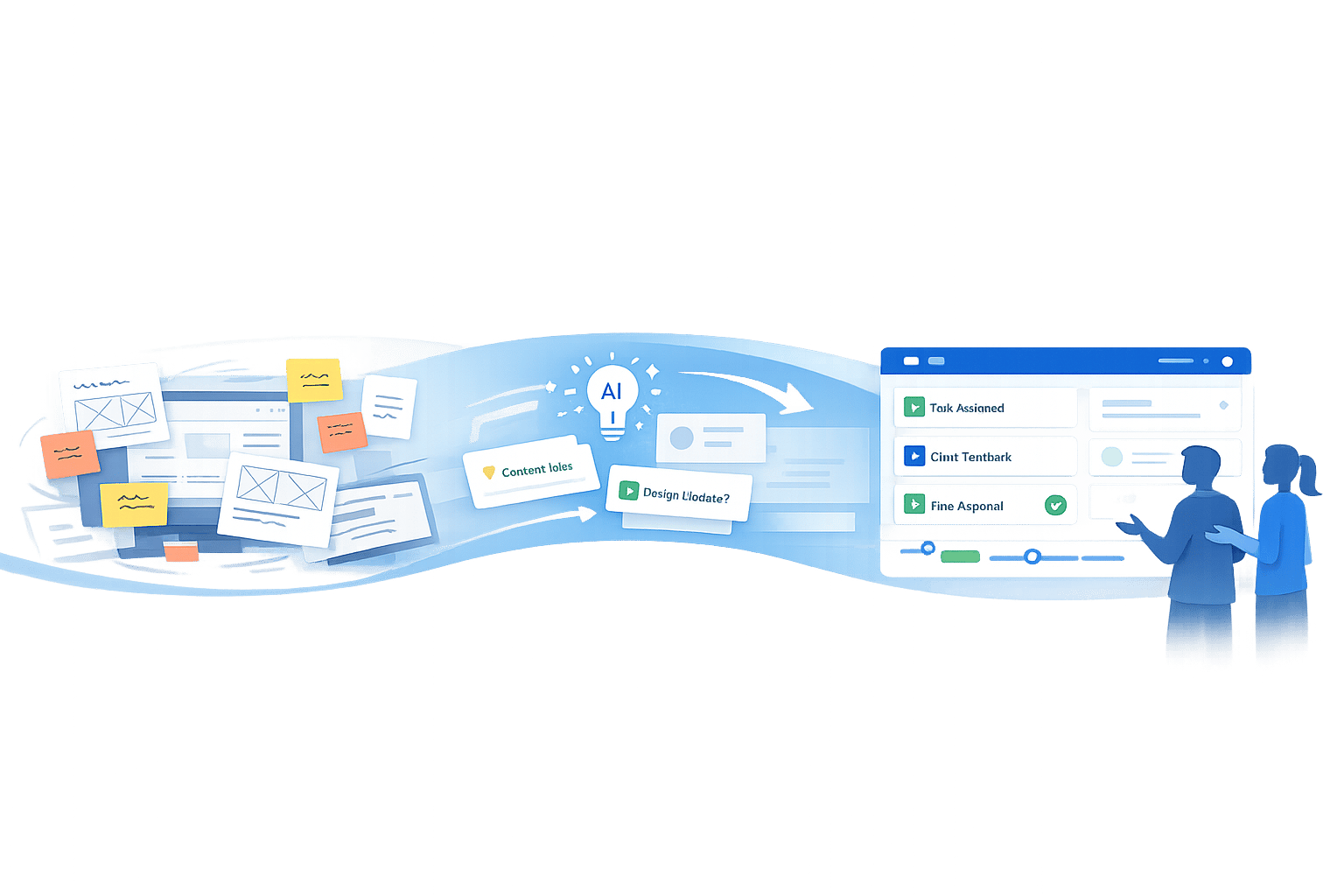
How Freelancers and Agencies Should Adapt to AI
Introduction
With artificial intelligence (AI) advancing at an unprecedented rate, professionals in creative industries, from freelancers to marketing teams, are grappling with existential questions about the future of their work. The year 2026 marks a pivotal moment where AI’s capabilities are not only transforming industries but also redefining roles, workflows, and expectations. This article dissects how AI is reshaping the landscape of creative and technical work, offering actionable strategies for adaptation and survival in a rapidly shifting marketplace.
Whether you're a freelancer building websites, an agency managing client campaigns, or an in-house marketing team juggling stakeholder feedback, understanding how to adapt to AI is critical. From leveraging AI tools to redefining your role in the ecosystem, this article provides insights to help professionals navigate this transformative era.
sbb-itb-32f6eb2
The Current State of AI in the Creative and Technical Industries
AI has passed a significant threshold where its applications are no longer theoretical but deeply practical. In 2026, AI-driven tools are being used to write and review code, generate creative content, streamline workflows, and even challenge traditional educational platforms. Here’s an overview of how AI is reshaping the industry:
1. AI’s Impact on Productivity
AI is enabling professionals to achieve levels of productivity that were unimaginable just a few years ago. Developers, for example, report that tools like AI code generators are now writing up to 90-95% of their code, with minimal manual intervention required. While this boosts efficiency, it raises the question: What role does the human developer play when AI can deliver such accuracy and speed?
2. Challenges Facing Educational Content
Traditional educational platforms and tutorials are seeing a decline in user engagement. Why? AI platforms like ChatGPT and Claude are now sophisticated enough to answer niche, context-specific questions, making static courses and guides seem outdated. This shift means that developers and creatives must rethink how they consume educational content - and, for those in the educational space, how they deliver value.
3. The Evolving Job Market
The job market itself is in flux, with many companies adopting AI to reduce costs and streamline operations. Junior developers and entry-level positions, once seen as opportunities to break into the industry, are becoming scarce. Companies are prioritizing senior talent and hiring professionals who offer skills that complement AI rather than compete with it.
Adapting to AI: Strategies for Professionals
The rapid pace of AI adoption can feel overwhelming, but there are practical ways to stay relevant and even thrive in this new era. Below are key strategies that freelancers, agencies, and marketing teams can implement to adapt effectively.
1. Leverage AI as a Tool, Not a Competitor
Instead of fearing AI, embrace it as an enhancement to your skill set. Here are a few ways to integrate AI into your workflow:
- For Freelancers: Use AI tools to handle repetitive tasks, such as generating code snippets, creating initial drafts, or conducting basic research. This lets you focus on high-value, creative problem-solving.
- For Agencies: Implement AI to streamline project management, consolidate client feedback, and generate data-driven insights for campaigns. Tools like AI-powered task managers and feedback analyzers can reduce revision cycles and improve client satisfaction.
- For Marketing Teams: Utilize AI to analyze user behavior, produce personalized marketing content, and automate aspects of customer engagement.
2. Develop "Soft" Skills
Technical skills are becoming increasingly democratized thanks to AI, but soft skills remain irreplaceable. Focus on:
- Clear communication: Strong written and verbal communication ensures alignment with clients and stakeholders.
- Team collaboration: Knowing how to coordinate with both human and AI contributors is becoming a vital skill.
- Adaptability: Cultivating the ability to pivot roles or industries will help you stay resilient in uncertain times.
3. Diversify Your Skill Set
Specializing in a single technical skill is becoming risky. Instead, aim for a T-shaped skill set: broad foundational knowledge paired with deep expertise in one area.
- Example: A developer might combine frontend expertise with knowledge of AI-driven design tools.
- For marketers, pairing content strategy with technical know-how in AI-driven audience segmentation can set you apart.
4. Invest in Networking
The power of connections cannot be overstated. Networking might not come naturally to everyone, but it’s increasingly critical:
- Attend industry events to stay updated on trends.
- Participate in online forums, such as Discord communities or LinkedIn groups, to connect with peers.
- Build a portfolio that showcases your work and aligns with current industry needs.
5. Create a Financial Safety Net
Economic uncertainty in the tech space is real, and layoffs are not uncommon. Building an emergency fund or diversifying income streams (e.g., freelancing, consulting, or selling digital products) can help you weather potential disruptions.
The Role of Creativity in an AI-Driven World
While AI excels at tasks driven by logic and pattern recognition, it still struggles with true creativity and originality. This presents an opportunity for professionals to redefine their roles:
- Focus on Conceptual Work: AI can assist in execution, but the ideation stage - brainstorming campaign concepts, designing original branding, or crafting unique narratives - still requires human ingenuity.
- Enhance Client Relationships: AI cannot replace the trust and understanding that comes from genuine human interaction. Professionals who can build strong client relationships will remain invaluable.
Key Takeaways
- Understand AI’s Capabilities: Stay updated on how AI tools are evolving and find ways to integrate them into your workflow.
- Adapt Your Skill Set: Shift from purely technical skills to a blend of soft skills, creative thinking, and technical expertise.
- Network Strategically: Build relationships within and beyond your industry to uncover new opportunities and collaborations.
- Diversify Your Expertise: Explore adjacent industries or specializations to expand your career options.
- Embrace a Growth Mindset: Be prepared to pivot roles, learn new tools, and stay flexible as industries evolve.
- Create a Financial Cushion: Save money to ensure you can navigate periods of uncertainty without undue stress.
- Leverage Creativity: Use your human originality and judgment to complement AI’s executional power.
- Focus on Client Relationships: Hone interpersonal skills to deliver value that AI cannot replicate.
Conclusion
2026 is a year of transformation, and while AI is undeniably changing the landscape of work, it’s far from the end of human innovation and value. By embracing AI as a tool, investing in soft skills, and remaining adaptable, professionals can not only survive but thrive in this era of rapid change. The key lies in staying informed, proactive, and open to new possibilities.
As freelancers, agencies, and in-house teams look to the future, the question is no longer, "Will AI take my job?" Instead, it’s, "How can I use AI to redefine my role and create new opportunities?" The answer lies in being strategic, resilient, and, above all, innovative.
Source: "AI Changed Everything - What Do Developers Do Now?" - HTML All The Things, YouTube, Jan 20, 2026 - https://www.youtube.com/watch?v=PVQnbgtSwwU